Visit the Blessed Lands
A comprehensive guide to the sacred sites of Makkah and Madinah — their stories, the du'as to recite, and the etiquette to observe when visiting.
Important Note
Visiting these historical sites is recommended (mustahabb) and spiritually enriching, but it is not part of the rites of Umrah or Hajj. No acts of worship at these sites should exceed what is prescribed in the Sunnah. Treat these visits as opportunities for reflection, gratitude, and sending salutations upon the Prophet ﷺ and his companions.
A Note on Tawheed
All du'a, requests, hopes, fears, and acts of worship are directed to Allah alone. While we love, honor, and send salams upon the Prophet ﷺ, his family, companions, and the righteous, we do not seek help from them, ask them for our needs, or direct acts of worship toward them.
Visiting the Prophet Muhammad ﷺ
One of the most profound moments of your journey. Learn the proper way to visit the final resting place of the Messenger of Allah ﷺ with the respect, love, and etiquette it deserves.
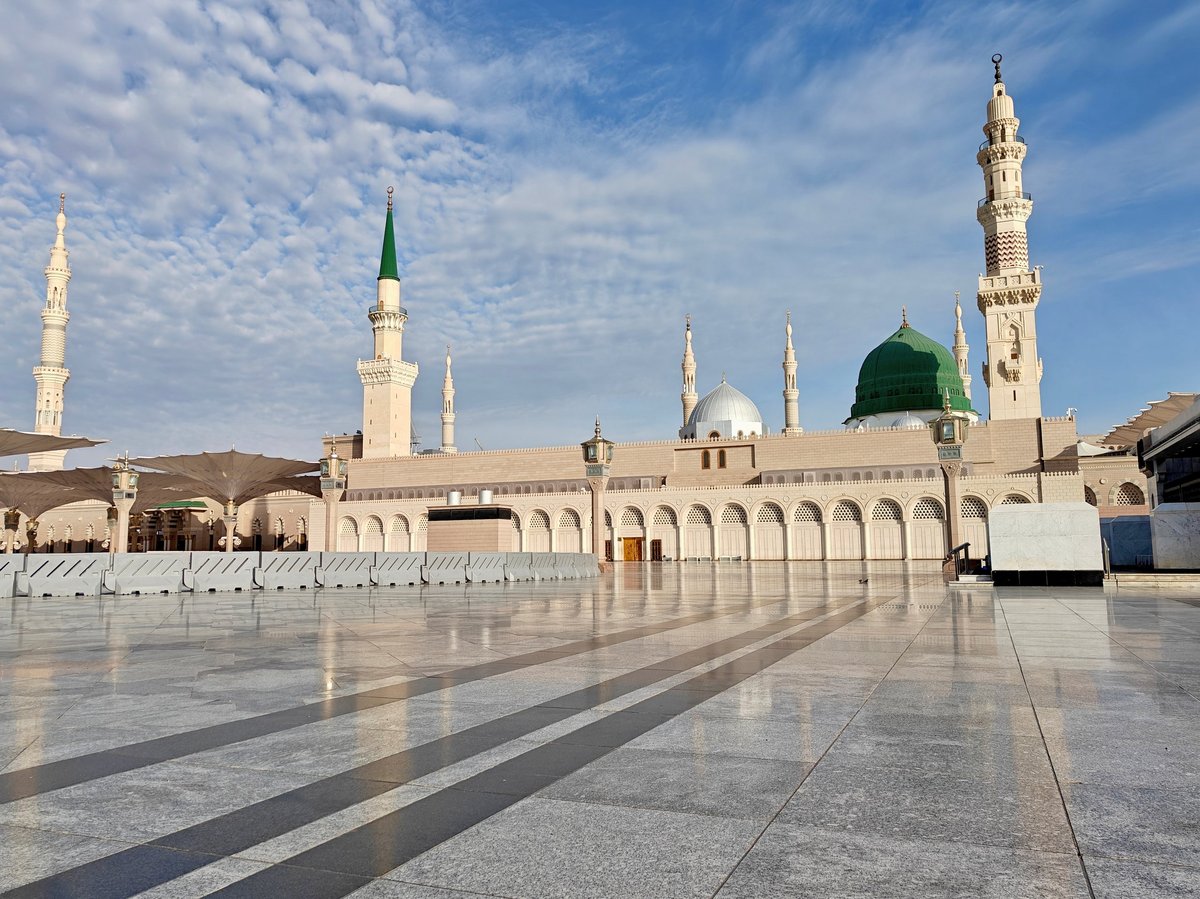
The Story of the Prophet's Burial
When the Messenger of Allah ﷺ passed away on Monday, 12th Rabi' al-Awwal, 11 AH, the companions were overwhelmed with grief. Umar ibn al-Khattab (RA) could not accept it and drew his sword, but Abu Bakr as-Siddeeq (RA) calmed the people and recited: "Muhammad is not but a messenger. Many messengers have passed before him. If he dies or is killed, will you turn back on your heels?" (3:144). The companions decided to bury the Prophet ﷺ in the very room where he passed away — the chamber of Aisha (RA) — based on his statement: "Prophets are buried where they die." Abu Bakr and Umar were later buried beside him by the will of Allah and the permission of Aisha (RA).
How to Visit the Prophet's Grave (Step by Step)
- 1Enter Masjid an-Nabawi with your right foot and recite: "Bismillah, was-salatu was-salamu 'ala Rasulillah. Allahumma-ftah li abwaba rahmatik." (In the name of Allah. Peace and blessings be upon the Messenger of Allah. O Allah, open for me the doors of Your mercy.)
- 2If possible, pray two rak'ahs of Tahiyyat al-Masjid (greeting the mosque) in the Rawdah (Riyadhul Jannah) area — the garden from the gardens of Paradise, located between the Prophet's pulpit and his house (now his grave). This area is currently marked by green carpet.
- 3Approach the Prophet's grave with the utmost respect, humility, and a lowered voice. The grave is located in the southeastern corner of the mosque, behind the gold and green metal screens. Remember: you are standing before the Messenger of Allah ﷺ — compose yourself and make your heart present.
- 4Stand facing the grave with your back to the Qiblah. Give your salam to the Prophet ﷺ in a moderate, respectful voice (not shouting, not too quiet). Many scholars mention that salams conveyed to the Prophet ﷺ are presented to him, and Allah knows best — this is a moment of connection across the centuries.
- 5After greeting the Prophet ﷺ, move slightly to your right and greet Abu Bakr as-Siddeeq (may Allah be pleased with him). Then move slightly further to your right and greet Umar ibn al-Khattab (may Allah be pleased with him). Do not linger or crowd the area — make your salams and make space for others.
Salam Upon the Prophet ﷺ
Stand before the grave of the Prophet ﷺ with your back to the Qiblah, face the grave, and recite the following salutation with presence of heart:
السَّلَامُ عَلَيْكَ يَا رَسُولَ اللَّهِ، السَّلَامُ عَلَيْكَ يَا نَبِيَّ اللَّهِ، السَّلَامُ عَلَيْكَ يَا خَيْرَ خَلْقِ اللَّهِ، السَّلَامُ عَلَيْكَ يَا حَبِيبَ اللَّهِ، السَّلَامُ عَلَيْكَ يَا سَيِّدَ الْمُرْسَلِينَ وَخَاتَمَ النَّبِيِّينَ
As-salamu 'alayka ya Rasulallah. As-salamu 'alayka ya Nabiyallah. As-salamu 'alayka ya khayra khalqillah. As-salamu 'alayka ya habiballah. As-salamu 'alayka ya sayyidal-mursaleena wa khataman-nabiyyeen.
Peace be upon you, O Messenger of Allah. Peace be upon you, O Prophet of Allah. Peace be upon you, O best of Allah's creation. Peace be upon you, O beloved of Allah. Peace be upon you, O master of the messengers and seal of the prophets. I bear witness that there is no god but Allah, and I bear witness that Muhammad is His servant and Messenger. I bear witness that you conveyed the message, fulfilled the trust, advised the Ummah, and strove in the path of Allah until certainty came to you. May Allah reward you on behalf of your Ummah with the best of what He has rewarded any prophet on behalf of his people.
You may also add these words of testimony:
أَشْهَدُ أَنْ لَا إِلَهَ إِلَّا اللَّهُ وَأَنَّكَ رَسُولُ اللَّهِ، وَأَنَّكَ قَدْ بَلَّغْتَ الرِّسَالَةَ، وَأَدَّيْتَ الْأَمَانَةَ، وَنَصَحْتَ الْأُمَّةَ، وَجَاهَدْتَ فِي اللَّهِ حَقَّ جِهَادِهِ، فَجَزَاكَ اللَّهُ عَنْ أُمَّتِكَ أَفْضَلَ مَا جَزَى نَبِيًّا عَنْ قَوْمِهِ
Ash-hadu alla ilaha illallah, wa annaka Rasulullah, wa annaka qad ballaghtar-risalah, wa addaytal-amanah, wa nasahtal-ummah, wa jahadta fillahi haqqa jihadih, fa jazakallahu 'an ummatika afdala ma jaza nabiyyan 'an qawmih.
I bear witness that there is no god but Allah, and that you are the Messenger of Allah, and that you conveyed the message, fulfilled the trust, advised the Ummah, and strove in the path of Allah as He deserves. May Allah reward you on behalf of your Ummah with the best of what He has ever rewarded any prophet on behalf of his people.
Conveying Salam From Family and Friends
It is a beautiful practice to convey salams on behalf of those who asked you — your parents, your spouse, your children, your friends, or anyone who said "send my salam when you visit the Prophet ﷺ." Stand before the grave and say:
السَّلَامُ عَلَيْكَ يَا رَسُولَ اللَّهِ مِنْ وَالِدَيَّ وَأَهْلِي وَأَحِبَّتِي وَكُلِّ مَنْ أَوْصَانِي بِالسَّلَامِ عَلَيْكَ
As-salamu 'alayka ya Rasulallah min walidayya wa ahli wa ahibbati wa kulli man awsani bis-salami 'alayk.
Peace be upon you, O Messenger of Allah, from my parents, my family, my loved ones, and everyone who asked me to send salam upon you.
The Qur'anic Command — Send Blessings Upon the Prophet ﷺ
إِنَّ اللَّهَ وَمَلَائِكَتَهُ يُصَلُّونَ عَلَى النَّبِيِّ ۚ يَا أَيُّهَا الَّذِينَ آمَنُوا صَلُّوا عَلَيْهِ وَسَلِّمُوا تَسْلِيمًا
"Indeed, Allah and His angels send blessings upon the Prophet. O you who believe, send blessings upon him and greet him with peace." (Surah al-Ahzab 33:56). As you stand before the Prophet ﷺ, recite abundant salawat — this is the very act Allah commanded in the Qur'an.
Things to Do When Visiting the Prophet's Grave
- Enter with the right foot and recite the masjid entry du'a: "Allahumma-ftah li abwaba rahmatik" (O Allah, open for me the doors of Your mercy).
- Pray two rak'ahs of Tahiyyat al-Masjid in the Rawdah (Riyadhul Jannah) area — the green-carpeted section between the pulpit and the grave — if space permits.
- Approach the Prophet's grave with humility and a lowered voice — compose your heart, remember you are standing before the greatest of creation ﷺ.
- Stand with your back to the Qiblah, face the grave, and give your salam to the Prophet ﷺ with the words: "As-salamu 'alayka ya Rasulallah..." — speak in a moderate, respectful tone.
- After greeting the Prophet ﷺ, send abundant salawat (salutations): "Allahumma salli 'ala Muhammad wa 'ala ali Muhammad..." — this is a moment accepted by Allah.
- Move slightly to your right (about one step) and give salam to Abu Bakr as-Siddeeq (RA). Then move one more step and give salam to Umar ibn al-Khattab (RA).
- Make heartfelt du'a to Allah while facing the Qiblah (NOT the grave). Ask for forgiveness, guidance, the wellbeing of your family, and acceptance of your pilgrimage. This is a blessed place for reflection and sincere du'a to Allah.
- If you promised others you would convey their salam, remember to say: "As-salamu 'alayka ya Rasulallah from [name]..." — fulfilling this trust is a beautiful act of loyalty.
What to Avoid at the Prophet's Grave
- Do NOT face the grave when making du'a to Allah — always turn toward the Qiblah for supplication.
- Do NOT touch, kiss, or wipe the metal screens surrounding the grave — this has no basis in the Sunnah and is an innovation (bid'ah).
- Do NOT make tawaf (circumambulation) around the grave or any part of the chamber — tawaf is exclusively for the Ka'bah.
- Do NOT raise your voice, shout, or cry out loudly — the Prophet ﷺ is honored even in his grave, and loud voices disturb those in worship.
- Do NOT bow, prostrate, or make any gesture of worship toward the grave — worship is for Allah alone.
- Do NOT linger excessively or crowd the area — the screens are narrow, many pilgrims are waiting, and the Sunnah is to make your salams efficiently and make way.
Salam to the Two Companions
After greeting the Prophet ﷺ, move one step to your right and greet Abu Bakr, then one more step to greet Umar (may Allah be pleased with them both).
Salam to Abu Bakr as-Siddeeq (RA)
السَّلَامُ عَلَيْكَ يَا أَبَا بَكْرٍ الصِّدِّيقَ، يَا خَلِيفَةَ رَسُولِ اللَّهِ، وَيَا رَفِيقَهُ فِي الْغَارِ، جَزَاكَ اللَّهُ عَنِ الْإِسْلَامِ وَالْمُسْلِمِينَ خَيْرًا
As-salamu 'alayka ya Aba Bakrin as-Siddeeq, ya khaleefata Rasulillah, wa ya rafeeqahu fil-ghar. Jazakallahu 'anil-Islami wal-muslimeena khayra.
Salam to Umar ibn al-Khattab (RA)
السَّلَامُ عَلَيْكَ يَا عُمَرَ بْنَ الْخَطَّابِ، يَا أَمِيرَ الْمُؤْمِنِينَ، جَزَاكَ اللَّهُ عَنِ الْإِسْلَامِ وَالْمُسْلِمِينَ خَيْرًا
As-salamu 'alayka ya 'Umar ibn al-Khattab, ya ameeral-mu'mineen. Jazakallahu 'anil-Islami wal-muslimeena khayra.
Etiquette at the Prophet's Grave
- Lower your voice — the Prophet ﷺ is honored even in his grave, and loud voices disturb others in worship.
- Do not face the grave while making du'a to Allah. You are visiting the Prophet ﷺ, not worshipping him. Face the Qiblah when making du'a to Allah.
- Do not touch, kiss, or wipe the metal screens surrounding the grave. This has no basis in the Sunnah.
- Do not make tawaf around the grave. Tawaf is only for the Ka'bah.
- Be patient and considerate. The area is often crowded. Make your salams and move aside so others can visit too.
Ar-Rawdah Ash-Sharifah (Riyadhul Jannah)
The blessed garden between the Prophet's pulpit and his burial chamber
You are now entering Ar-Rawdah Ash-Sharifah — the Noble Garden — which the Prophet ﷺ described as "a garden from the gardens of Paradise." (Sahih al-Bukhari). This small rectangle between his blessed house (now his grave) and his pulpit (minbar) is one of the most sacred and spiritually charged places on earth. Many scholars regarded this as a blessed place for prayer, remembrance, and sincere du'a. You are standing where the Prophet ﷺ stood, prayed, and led the best generation of humanity. The green carpet beneath your feet marks the very ground he blessed — the same ground walked by Abu Bakr, Umar, and thousands of companions. Take a moment to breathe, settle your heart, and let the weight of where you are sink in. You are in the Rawdah of the Messenger of Allah ﷺ — a piece of Paradise on earth.
The Story
Lessons for Today
Historical Significance
Authenticity & Scholarly Notes
Du'a in the Rawdah
اللَّهُمَّ صَلِّ عَلَى مُحَمَّدٍ وَعَلَى آلِ مُحَمَّدٍ كَمَا صَلَّيْتَ عَلَى إِبْرَاهِيمَ وَعَلَى آلِ إِبْرَاهِيمَ إِنَّكَ حَمِيدٌ مَجِيدٌ
Allahumma salli 'ala Muhammadin wa 'ala ali Muhammadin kama sallayta 'ala Ibrahima wa 'ala ali Ibrahima, innaka Hamidum-Majid.
O Allah, send Your salutations upon Muhammad and upon the family of Muhammad, as You sent salutations upon Ibrahim and the family of Ibrahim. Indeed, You are Praiseworthy and Glorious.
Etiquette & Protocol
Common Mistakes to Avoid
Sunnah Compliance
Visitor Information
Walk Through & Reflect
2–3 minutesYou are now in Ar-Rawdah Ash-Sharifah — the Noble Garden — also known as Riyadhul Jannah, a garden from the gardens of Paradise. This blessed area between the Prophet's pulpit and his burial chamber is the very place he described as a piece of Paradise on earth. It lies between his house, where his blessed grave now rests alongside Abu Bakr and Umar, and his pulpit, from which he addressed the companions. This small rectangle — only 22 by 15 meters — holds the spiritual weight of a piece of Jannah itself. Take this moment to pray two rak'ahs if space permits, send abundant salawat upon the Prophet ﷺ, and make heartfelt du'a to Allah. Turn your face toward the Qiblah — not toward the grave — when you supplicate. Ask Allah for forgiveness, guidance, Paradise, and protection from the Fire. Ask Allah to grant you the intercession of the Prophet ﷺ on the Day of Judgment. Ask for your family, your loved ones, your deen, and your worldly affairs — all that is good. Many scholars regarded this as a blessed place for prayer, remembrance, and sincere du'a. Remember the thousands of companions who once filled this space, praying behind the Prophet ﷺ himself. You are walking where they walked, praying where they prayed. Make every moment count.
Pause & Reflect
✦What would I ask Allah for if I knew my du'a would be accepted right now?
✦Have I prepared my heart for this moment, or am I distracted by the crowd?
✦If this is a piece of Paradise on earth, what does that say about the Paradise that awaits the righteous?
Frequently Asked Questions
Do I need a Nusuk booking to enter the Rawdah?
Yes — booking through the Nusuk app is mandatory. Time slots are allocated separately for men and women and may fill quickly during peak seasons.
Is the Rawdah the same as Riyadhul Jannah?
Yes — they refer to the same area. Ar-Rawdah Ash-Sharifah (the Noble Garden) is also called Riyadhul Jannah (Garden of Paradise), described by the Prophet ﷺ as the area between his house and his pulpit.
Can women visit the Rawdah?
Yes — women have designated time slots. Check the Nusuk app for women's visiting times.
What if my Nusuk booking is rejected or unavailable?
Keep trying — slots are released regularly. You can also pray anywhere in Masjid an-Nabawi, as the entire mosque is blessed. The Rawdah adds virtue but is not obligatory.
Is there a special du'a I must recite in the Rawdah?
No — there is no specific prescribed du'a. Send abundant salawat upon the Prophet ﷺ and make heartfelt personal du'a. Sincerity is more important than memorization.
How long can I stay in the Rawdah?
Time slots are typically a few minutes long. Plan your prayer and du'a before entering, and be mindful of others waiting.
Masjid Quba — The First Mosque in Islam
A mosque founded on piety from the very first day
You are standing before the very first mosque built in Islam — Masjid Quba. The Prophet ﷺ himself laid its foundation stones when he first arrived in Madinah during the Hijrah. He would visit Quba every Saturday, sometimes walking, sometimes riding, and pray two rak'ahs here. The reward for praying here is immense — the Prophet ﷺ said: "Whoever purifies himself at home, then comes to Masjid Quba and prays in it, he will have the reward of Umrah." (Sunan Ibn Majah). Let the weight of being in the first masjid of this Ummah settle into your heart.
The Story
Lessons for Today
Historical Significance
Authenticity & Scholarly Notes
Du'a at Masjid Quba
اللَّهُمَّ اجْعَلْ صَلَاتِي فِي هَذَا الْمَسْجِدِ مَقْبُولَةً وَاكْتُبْ لِي أَجْرَ عُمْرَةٍ
Allahummaj'al salati fi hadhal-masjidi maqboolah, waktub li ajra 'umrah.
O Allah, make my prayer in this mosque accepted and record for me the reward of Umrah.
Etiquette & Protocol
Common Mistakes to Avoid
Sunnah Compliance
Visitor Information
Walk Through & Reflect
2–3 minutesYou are standing at Masjid Quba, the very first mosque built in the history of Islam. When the Prophet ﷺ arrived in Madinah during the Hijrah, he personally laid the foundation stones of this mosque with his own blessed hands. The companion who hosted him, Amr ibn Awf, watched as the Messenger of Allah picked up stones and set them in place. The Prophet ﷺ would return to this mosque every Saturday, walking or riding. He said, whoever purifies himself at home and prays in Masjid Quba will have the reward of Umrah. You are now in a mosque that Allah himself praised in the Quran as founded on piety from the very first day. Enter with your right foot, pray your two rak'ahs, and make du'a for the reward of an accepted Umrah.
Pause & Reflect
✦What am I building that will outlast me — a legacy of piety or mere worldly achievement?
✦Am I consistent in my acts of worship, like the Prophet ﷺ visiting Quba every Saturday?
✦The reward of Umrah for two rak'ahs — what does this teach me about Allah's infinite generosity?
Frequently Asked Questions
Is praying at Masjid Quba really equal to Umrah?
The Prophet ﷺ said: "Whoever purifies himself at home, then comes to Masjid Quba and prays in it, he will have the reward of Umrah." (Sunan Ibn Majah 1412). The reward is "like" Umrah in merit, but it does not replace the obligation of performing actual Umrah.
Which day is best to visit Quba?
Saturday — the Prophet ﷺ visited Quba every Saturday, walking or riding (Sahih al-Bukhari 1191).
How far is Quba from Masjid an-Nabawi?
Approximately 3.5 km south — about 10-15 minutes by taxi or ride-share from the central area.
Can I walk to Quba?
Yes — it takes approximately 40-50 minutes on foot. Many pilgrims walk when the weather permits.
Masjid al-Qiblatain — The Mosque of Two Qiblahs
Where revelation changed the direction of prayer
You are standing in Masjid al-Qiblatain — the Mosque of the Two Qiblahs. It was here, during a congregational prayer led by the Prophet ﷺ, that revelation came commanding the Muslims to turn their faces from Jerusalem toward the Ka'bah in Makkah. In the middle of the prayer, the Prophet ﷺ turned, and the entire congregation turned with him — mid-prayer, mid-row. This was one of the most dramatic moments of revelation: a physical pivot that symbolized the Muslim Ummah's distinct identity. Reflect on the obedience of the companions — they didn't hesitate or ask why. They turned because Allah commanded.
The Story
Lessons for Today
Historical Significance
Authenticity & Scholarly Notes
Du'a at Masjid al-Qiblatain
اللَّهُمَّ ثَبِّتْ قُلُوبَنَا عَلَى دِينِكَ وَطَاعَتِكَ كَمَا ثَبَّتَّ قِبْلَةَ الْمُسْلِمِينَ
Allahumma thabbit quloobana 'ala deenika wa ta'atika kama thabbatta qiblatal-muslimeen.
O Allah, make our hearts firm upon Your religion and obedience, just as You firmly established the Qiblah of the Muslims.
Etiquette & Protocol
Common Mistakes to Avoid
Sunnah Compliance
Visitor Information
Walk Through & Reflect
2–3 minutesYou are inside Masjid al Qiblatain, the Mosque of the Two Qiblahs. Imagine the scene: the Prophet ﷺ was leading the companions in Dhuhr prayer. They had been praying toward Jerusalem for sixteen months since the Hijrah. Midway through the prayer, revelation descended commanding the change of the Qiblah to the Ka'bah in Makkah. The Prophet ﷺ turned, and every companion in the rows behind him turned with him, mid-prayer, without hesitation, without question. This was absolute submission to Allah. The Qiblah is more than a direction; it is the symbol of Muslim unity, identity, and obedience. As you pray here, ask Allah to keep your heart firm on His religion and to make you among those who submit completely to His commands.
Pause & Reflect
✦How quickly do I respond when Allah commands something?
✦Do I trust that Allah's commands are always for my benefit, even when I don't understand?
✦Where in my life is Allah asking me to "turn" — to change direction for His sake?
Frequently Asked Questions
Why is it called the Mosque of Two Qiblahs?
Because it is where the Prophet ﷺ, mid-prayer, received revelation to turn from Jerusalem toward the Ka'bah. The companions turned with him immediately.
Is the current building original?
No — the mosque has been rebuilt and expanded many times over the centuries. The location is authentic; the building is modern.
Is there a special prayer to pray here?
No — pray Tahiyyat al-Masjid (two rak'ahs) as you would in any mosque. The virtue is in reflecting on the event, not in a specific ritual.
Mount Uhud — The Mountain That Loves Us
Site of the second great battle of Islam
Mount Uhud rises before you — a mountain the Prophet ﷺ loved and said loves us in return. This is not just a geographical landmark; it is a witness to one of the most emotional and instructive chapters of Islamic history. Here, the Battle of Uhud was fought, seventy companions were martyred, and the Prophet ﷺ himself was wounded. This mountain holds the graves of heroes — Hamza (RA), Mus'ab ibn Umayr (RA), and dozens of others who gave their lives defending the Messenger of Allah ﷺ. As you gaze upon Uhud, let your heart fill with love for those who loved this mountain.
The Story
Lessons for Today
Historical Significance
Authenticity & Scholarly Notes
Du'a at Mount Uhud
رَبَّنَا اغْفِرْ لَنَا ذُنُوبَنَا وَإِسْرَافَنَا فِي أَمْرِنَا وَثَبِّتْ أَقْدَامَنَا وَانْصُرْنَا عَلَى الْقَوْمِ الْكَافِرِينَ
Rabbana-ghfir lana dhunoobana wa israfana fi amrina wa thabbit aqdamana wansurna 'alal-qawmil-kafireen.
Our Lord, forgive us our sins and our excesses in our affairs, and make firm our feet and give us victory over the disbelieving people.
Etiquette & Protocol
Common Mistakes to Avoid
Sunnah Compliance
Visitor Information
Walk Through & Reflect
2–3 minutesBefore you rises Mount Uhud, the mountain the Prophet ﷺ loved and said loves us in return. Here, in the third year after the Hijrah, the Battle of Uhud took place. The Muslim army, initially victorious, suffered a devastating reversal when the archers left their post on the mountain, disobeying the Prophet's explicit command. Khalid ibn al Walid, then a non-Muslim, saw the gap and led a devastating cavalry charge. Seventy companions were martyred, including Hamza ibn Abdul Muttalib, the beloved uncle of the Prophet and the Lion of Allah. The Prophet ﷺ himself was wounded, his tooth broken and blood streaming down his blessed face. When asked to curse the enemy, he replied, I was not sent to curse, but as a mercy. As you look at Uhud, send salams to Hamza and the martyrs. Reflect on the cost of disobedience, the virtue of patience in hardship, and the mercy of the Prophet ﷺ even toward his enemies.
Pause & Reflect
✦What command of Allah have I delayed obeying?
✦Where has the pursuit of worldly gain distracted me from my true purpose?
✦If I had stood among the archers of Uhud, would I have remained at my post?
✦Am I willing to endure wounds in the path of truth, as the Prophet ﷺ did?
Frequently Asked Questions
Is climbing Mount Uhud sunnah?
No — visiting Uhud for reflection and sending salams to the martyrs is mustahabb (recommended), but there is no sunnah of climbing the mountain itself as an act of worship.
Can I visit the martyrs' cemetery?
Yes — you can send salams to Hamza (RA) and the Uhud martyrs from outside the cemetery fence. Do not enter the graves or engage in any acts not prescribed by the Sunnah.
How long should I spend at Uhud?
Most visitors spend 30-60 minutes. The main purpose is reflection and sending salams, not tourism.
Is it permissible to take photos at Uhud?
Photos for personal remembrance are fine, but treat the site with reverence — it is a battlefield and cemetery, not a tourist attraction.
Masjid al-Khandaq — The Seven Mosques
Where the Battle of the Trench was won by a miracle
You are visiting the sites of the Battle of the Trench (Ghazwat al-Khandaq, 5 AH), one of the most miraculous victories in Islamic history. The Quraysh and their allies — a confederate army of 10,000 — marched on Madinah to crush the Muslims once and for all. On the advice of Salman al-Farsi (RA), the Muslims dug a trench around Madinah, a defensive tactic unknown in Arabia. For weeks, the Muslims endured hunger, cold, and fear — described in the Qur'an: "Their eyes were wild with fear, and their hearts reached their throats" (33:10). Then, Allah sent a freezing wind that uprooted the enemy tents and scattered them, and the confederates fled without a fight. Victory came from Allah alone.
The Story
Lessons for Today
Historical Significance
Authenticity & Scholarly Notes
Du'a at the Seven Mosques
اللَّهُمَّ مُنْزِلَ الْكِتَابِ، سَرِيعَ الْحِسَابِ، اهْزِمِ الْأَحْزَابَ، اللَّهُمَّ اهْزِمْهُمْ وَزَلْزِلْهُمْ
Allahumma munzilal-kitab, saree'al-hisab, ihzimil-ahzab. Allahummah-zimhum wa zalzilhum.
O Allah, Revealer of the Book, Swift in account, defeat the confederates. O Allah, defeat them and shake them.
Etiquette & Protocol
Common Mistakes to Avoid
Sunnah Compliance
Visitor Information
Walk Through & Reflect
2–3 minutesYou are at the site of the Battle of the Trench, one of the most dramatic chapters of Islamic history. In the fifth year after the Hijrah, a confederate army of ten thousand marched on Madinah to destroy Islam once and for all. On the advice of Salman al Farsi, the Muslims dug a trench around the exposed northern edge of Madinah, a defensive tactic unknown in Arabia. The Prophet ﷺ himself dug alongside his companions, his stomach tied with stones from hunger. For weeks, the Muslims endured cold, hunger, and fear. The Quran describes their state: their eyes were wild with fear and their hearts reached their throats. Then Allah sent a freezing wind that uprooted the enemy tents and scattered them. The confederates fled. Victory came without a single battle. As you stand here, remember: when all material causes fail, Allah's help is near. The trench was a means, but the victory was from Allah alone.
Pause & Reflect
✦Do I take practical steps (like the trench) while trusting Allah for the outcome?
✦When have I experienced Allah's help arriving from an unexpected direction?
✦The companions endured hunger, cold, and fear for weeks — what am I willing to endure for my faith?
Frequently Asked Questions
Are the Seven Mosques authentic?
The area is historically where the Battle of the Trench took place, but the specific identification of individual mosques with specific companions is not established in authentic hadith. Visit for reflection, not as a ritual.
Which du'a did the Prophet ﷺ make at the trench?
He recited: "Allahumma munzilal-kitab, saree'al-hisab, ihzimil-ahzab. Allahummah-zimhum wa zalzilhum" (O Allah, Revealer of the Book, Swift in account, defeat the confederates...) — narrated in Sahih al-Bukhari 4105.
Can I combine Khandaq with other visits?
Yes — the Seven Mosques area can be visited together with Uhud, as they are both north of Madinah.
Cave of Hira — Where Revelation Began
Jabal an-Nur in Makkah
You are climbing toward the Cave of Hira on Jabal an-Nur — the Mountain of Light. In this small cave, the course of human history was changed forever. It was here, in the solitude of this mountain, that the Prophet Muhammad ﷺ would retreat for days and weeks in contemplation before prophethood. And it was here that Jibril (AS) descended with the first five verses of Surah al-Alaq: "Read! In the name of your Lord who created..." (96:1-5). This cave is where revelation began. You are not just climbing a mountain — you are retracing the steps of the Prophet ﷺ toward the moment that illuminated the world.
The Story
Lessons for Today
Historical Significance
Authenticity & Scholarly Notes
Du'a at Mount Hira
اللَّهُمَّ نَوِّرْ قَلْبِي بِنُورِ الْقُرْآنِ كَمَا أَنْزَلْتَ الْوَحْيَ عَلَى نَبِيِّكَ فِي هَذَا الْمَكَانِ
Allahumma nawwir qalbi bi-nooril-qur'ani kama anzaltal-wahya 'ala nabiyyika fi hadhal-makan.
O Allah, illuminate my heart with the light of the Quran, just as You sent down revelation upon Your Prophet in this place.
Etiquette & Protocol
Common Mistakes to Avoid
Sunnah Compliance
Visitor Information
Walk Through & Reflect
2–3 minutesYou are climbing toward the Cave of Hira on Jabal an-Nur, the Mountain of Light. It was here, in this small cave overlooking Makkah, that the Prophet Muhammad ﷺ would retreat for days in solitude before prophethood, contemplating creation and the state of his society. And it was here, in the month of Ramadan, that the angel Jibril descended and commanded him: Iqra — Read. The Prophet replied, I cannot read. The angel embraced him tightly and repeated the command three times, then revealed the first five verses of Surah al-Alaq: Read in the name of your Lord who created, created man from a clinging substance. Read, and your Lord is the Most Generous, who taught by the pen, taught man that which he knew not. The revelation that began in this small cave would transform Arabia and eventually the world. As you stand here, reflect on the humility of the Prophet ﷺ, the weight of revelation, and the blessing of being from the Ummah of the one who received it.
Pause & Reflect
✦When was the last time I sat in solitude with my Lord?
✦What would the angel Jibril command me to "read" in the book of my own life?
✦The entire Qur'an began in a small, dark cave — what great purpose might Allah be nurturing in my own quiet moments?
Frequently Asked Questions
Is climbing Hira sunnah?
No — there is NO sunnah of climbing Hira as an act of worship. The Prophet ﷺ never returned to the cave after prophethood, nor did the companions climb it as a ritual. It is a historical visit for reflection.
How long is the climb?
45-60 minutes up, 30-45 minutes down, depending on your fitness level. There are approximately 600 steps.
Can elderly pilgrims climb Hira?
The climb is steep and physically demanding. Elderly pilgrims or those with health conditions should assess their fitness honestly. There is no religious obligation to reach the cave — the reflection can happen from below.
Is there a special prayer inside the cave?
No — there is no prescribed act of worship at the cave. Do not treat it as a shrine. Simply reflect on the first revelation.
Cave of Thawr — The Refuge
Jabal Thawr in Makkah
The Cave of Thawr on Jabal Thawr is the site of one of the most profound miracles of divine protection in Islamic history. If Hira is where revelation began, Thawr is where the survival of that revelation was secured. It was here that the Prophet ﷺ and Abu Bakr as-Siddeeq (RA) hid for three days during the Hijrah, while the Quraysh search party stood at the cave entrance — yet were blind to them. This place is a monument to tawakkul: absolute trust in Allah when every material cause says there is no hope.
The Story
Lessons for Today
Historical Significance
Authenticity & Scholarly Notes
Du'a at Cave Thawr
اللَّهُمَّ كَمَا حَفِظْتَ نَبِيَّكَ وَصَاحِبَهُ فِي هَذَا الْغَارِ، احْفَظْنَا مِنْ كُلِّ سُوءٍ وَشَرٍّ
Allahumma kama hafidhta nabiyyaka wa sahibahu fi hadhal-ghar, ihfadhna min kulli soo'in wa sharr.
O Allah, just as You protected Your Prophet and his companion in this cave, protect us from every harm and evil.
Etiquette & Protocol
Common Mistakes to Avoid
Sunnah Compliance
Visitor Information
Walk Through & Reflect
2–3 minutesYou are at the Cave of Thawr on Jabal Thawr. If Hira was where revelation began, Thawr was where the survival of that revelation was secured. During the Hijrah from Makkah to Madinah, the Prophet ﷺ and Abu Bakr as-Siddeeq hid in this cave for three days while the Quraysh search party scoured the mountains. The pursuers stood right at the cave entrance. Abu Bakr, fearing for the Prophet's safety, whispered, If one of them looks down at his feet, he will see us. The Prophet ﷺ replied with words that have comforted believers for fourteen centuries: Do not grieve. Indeed, Allah is with us. Some narrations describe a spider's web and a dove's nest at the cave entrance — signs through which Allah may have protected His Messenger. Though scholars differ on the authenticity of these specific details, what is certain and established in the Qur'an itself is that Allah protected them. Reflect on tawakkul — true reliance on Allah — and the profound bond between the Prophet ﷺ and his closest friend.
Pause & Reflect
✦Where in my life do I need to hear the words "Do not grieve; indeed Allah is with us"?
✦Who is the Abu Bakr in my life — the companion who stands by me in my darkest hour?
✦When every worldly means has failed, do I truly believe Allah is enough?
Frequently Asked Questions
Is climbing Thawr sunnah?
No — there is NO sunnah of climbing Thawr or praying inside the cave. The Prophet ﷺ never returned to it after the Hijrah. Many scholars advise against the climb due to its extreme difficulty and the lack of prescribed worship there.
How difficult is the climb?
Very challenging — more difficult than Hira, taking 1-2 hours up. Only attempt if you are physically fit and properly equipped.
Is the spider web story authentic?
The story of the spider web and dove is narrated in some seerah sources (like Ibn Ishaq) but is not found in Sahih al-Bukhari or Sahih Muslim. Scholars differ on its authenticity. What is certain — from the Qur'an itself — is that Allah protected the Prophet ﷺ and Abu Bakr.
Jannat al-Baqi — The Blessed Cemetery
Resting place of the Prophet's family and companions
You are at the entrance of Jannat al-Baqi', the blessed cemetery of Madinah. Thousands of companions, family members of the Prophet ﷺ, and righteous scholars lie buried here. Many of the Mothers of the Believers rest in this ground — including Aisha (RA) according to the widely accepted historical position — along with the Prophet's daughters Ruqayyah, Umm Kulthum, Zaynab, and Fatimah (RA), his son Ibrahim, his uncle Abbas (RA), and Uthman ibn Affan (RA) — the third Caliph and bearer of the two lights. The Prophet ﷺ used to visit Baqi' regularly, standing before the graves and saying: "Peace be upon you, O dwelling of believing people." To visit Baqi' is to honor those who carried Islam and to remind your own soul of the journey to come.
The Story
Lessons for Today
Historical Significance
Authenticity & Scholarly Notes
Du'a at Jannat al-Baqi'
السَّلَامُ عَلَيْكُمْ دَارَ قَوْمٍ مُؤْمِنِينَ، وَإِنَّا إِنْ شَاءَ اللَّهُ بِكُمْ لَاحِقُونَ، يَرْحَمُ اللَّهُ الْمُسْتَقْدِمِينَ مِنَّا وَالْمُسْتَأْخِرِينَ، اللَّهُمَّ اغْفِرْ لِأَهْلِ الْبَقِيعِ
As-salamu 'alaykum dara qawmin mu'mineen, wa inna in sha'a Allahu bikum lahiqoon. Yarhamullahul-mustaqdimeena minna wal-musta'khireen. Allahumma-ghfir li-ahlil-Baqi'.
Peace be upon you, O dwelling of believing people. And we, if Allah wills, shall join you. May Allah have mercy on those who went before us and those who will come after. O Allah, forgive the inhabitants of al-Baqi'.
Etiquette & Protocol
Common Mistakes to Avoid
Sunnah Compliance
Visitor Information
Walk Through & Reflect
2–3 minutesYou are at Jannat al-Baqi, the blessed cemetery of Madinah. Thousands of companions and family members of the Prophet ﷺ rest here. Many of the Mothers of the Believers — including several wives of the Prophet ﷺ — are buried in this ground, along with his daughters Ruqayyah, Umm Kulthum, Zaynab, and Fatimah, his son Ibrahim who died as an infant, his uncle Abbas, and Uthman ibn Affan, the third Caliph. The Prophet ﷺ used to visit Baqi regularly at the end of the night and say, Peace be upon you, O dwelling of believing people. What was promised to you has come to you. And we, if Allah wills, shall join you. O Allah, forgive the inhabitants of al-Baqi. As you stand here, send your salam to those buried in this blessed ground. Make du'a for them and for yourself. Let the reality of death soften your heart and strengthen your resolve to prepare for the journey that awaits us all.
Pause & Reflect
✦One day my name will be called, and I will join those who have gone before me.
✦What will people say of me when they visit my grave? What will Allah say?
✦Have I lived today in a way that prepares me for the inevitable journey?
Frequently Asked Questions
Can women visit Jannat al-Baqi?
Scholars differ — some permit it, others discourage it based on hadith about women frequently visiting graves. Follow the guidance of your school of thought.
Where exactly are the graves of the Prophet's family?
The exact locations of individual graves are not marked with certainty. The cemetery has been expanded and rebuilt many times over 1400+ years. Make du'a for all its inhabitants.
What is the proper etiquette at Baqi?
Enter facing the graves, greet the deceased with the sunnah salam, make du'a for them, do not walk on or sit on graves, and do not make du'a TO the deceased.
Jannat al-Mualla — The Makkan Cemetery
Resting place of the Prophet's ancestors and first wife
You are at Jannat al-Mualla, the ancient cemetery of Makkah. This blessed ground holds the remains of some of the earliest and most beloved figures in Islam. Here lies Khadijah bint Khuwaylid (RA) — the first believer, the beloved first wife of the Prophet ﷺ, the mother of Fatimah, and the woman who stood by him when no one else would. Here also lie the Prophet's ancestors, his uncle Abu Talib, and many companions from the early Makkan period. This is a place of deep love and gratitude — gratitude for those who supported Islam in its most vulnerable days, when the believers could be counted on one hand.
The Story
Lessons for Today
Historical Significance
Authenticity & Scholarly Notes
Du'a at Jannat al-Mualla
السَّلَامُ عَلَيْكُمْ دَارَ قَوْمٍ مُؤْمِنِينَ، وَإِنَّا إِنْ شَاءَ اللَّهُ بِكُمْ لَاحِقُونَ
As-salamu 'alaykum dara qawmin mu'mineen, wa inna in sha'a Allahu bikum lahiqoon.
Peace be upon you, O dwelling of believing people. And we, if Allah wills, shall join you.
Etiquette & Protocol
Common Mistakes to Avoid
Sunnah Compliance
Visitor Information
Walk Through & Reflect
2–3 minutesYou are at Jannat al-Mualla, the ancient cemetery of Makkah. Here lies Khadijah bint Khuwaylid, the first believer and the beloved first wife of the Prophet ﷺ. When the Prophet received the first revelation and returned from Hira trembling with fear, it was Khadijah who comforted him, believed in him instantly, and said the words that would sustain him: By Allah, Allah will never disgrace you. You maintain family ties, you bear the burden of the weak, you earn for the poor, you are generous to guests, and you help in times of true calamity. She was fifteen years his senior, a successful merchant who chose him for his character. For twenty-five years, he loved only her and married no other. When she died in the Year of Sorrow, the Prophet ﷺ buried her here. He never forgot her, speaking of her love and support until his own death. Send your salams to the Mother of the Believers and reflect on the virtue of those who believe first, without hesitation.
Pause & Reflect
✦Khadijah (RA) believed immediately when everyone else rejected — how quickly do I respond to the truth?
✦Who has supported me at my lowest, and have I been that support for others?
✦The Year of Sorrow reminds us that even the best of humanity suffered profound loss — how do I respond to grief?
Frequently Asked Questions
Where is Khadijah (RA) buried?
Khadijah bint Khuwaylid (RA) is buried in Jannat al-Mualla. The exact location of her grave within the cemetery is not known with certainty, as the cemetery has been rebuilt many times.
Where is the Prophet's mother buried?
Aminah bint Wahb, the mother of the Prophet ﷺ, is buried at Al-Abwa — a location between Makkah and Madinah — not at Jannat al-Mualla.
Can I visit Jannat al-Mualla during Hajj?
Yes — the cemetery is open during daylight hours and is within walking distance from Masjid al-Haram.
Masjid al-Jumu'ah — The First Friday Prayer
Where the Prophet ﷺ led the first Jumu'ah in Madinah
You are in Masjid al-Jumu'ah — the mosque where the very first Friday prayer was led by the Prophet Muhammad ﷺ himself. When the Prophet ﷺ arrived in Madinah after the Hijrah, he stopped at the area of Wadi Ranuna and delivered the first Jumu'ah khutbah, then led the first Jumu'ah prayer here. Friday prayer — the weekly Eid of the Muslims — began right at this spot. Pause and reflect: every Jumu'ah prayer you have ever prayed across your life traces its spiritual lineage back to this very place, to the Prophet ﷺ himself leading the congregation.
The Story
Lessons for Today
Historical Significance
Authenticity & Scholarly Notes
Du'a at Masjid al-Jumu'ah
اللَّهُمَّ اجْعَلْنَا مِنْ أَهْلِ الْجُمُعَةِ الْمَقْبُولِينَ، وَارْزُقْنَا شَفَاعَةَ نَبِيِّكَ يَوْمَ الْقِيَامَةِ
Allahummaj'alna min ahlil-jumu'atil-maqbooleen, warzuqna shafa'ata nabiyyika yawmal-qiyamah.
O Allah, make us among the accepted people of Jumu'ah, and grant us the intercession of Your Prophet on the Day of Resurrection.
Etiquette & Protocol
Common Mistakes to Avoid
Sunnah Compliance
Visitor Information
Walk Through & Reflect
2–3 minutesYou are at Masjid al-Jumu'ah, the mosque of the very first Friday prayer in Islamic history. When the Prophet ﷺ arrived in Madinah after the Hijrah, he stopped here at Wadi Ranuna before entering the city. Here he delivered the first Jumu'ah khutbah and led the first Jumu'ah prayer. Every Friday prayer you have ever prayed traces back to this moment, to the Prophet ﷺ standing before his small community of emigrants and helpers, teaching them the words of their Lord. The Jumu'ah is the weekly Eid of the Muslims, a day of gathering, mercy, and renewal. As you pray here, ask Allah to make you among the accepted worshippers on every Jumu'ah and to grant you the intercession of the Prophet ﷺ on the Day when all creation will be gathered.
Pause & Reflect
✦Do I treat Friday prayer as a gift or a burden?
✦Every Jumu'ah traces back to this very gathering led by the Prophet ﷺ — do I feel that connection when I stand in prayer?
✦What would my weekly routine look like if I centered it around Jumu'ah the way the earliest Muslims did?
Frequently Asked Questions
Is Masjid al-Jumu'ah the same as Masjid Quba?
No — they are different mosques. Masjid Quba is south of Madinah and is the first mosque built in Islam. Masjid al-Jumu'ah is where the Prophet ﷺ led the first Friday prayer, located in Wadi Ranuna about 3 km from Masjid an-Nabawi.
Can I combine it with other ziyarah sites?
Yes — Masjid al-Jumu'ah, Masjid Quba, and Masjid al-Qiblatain can be visited together as a half-day ziyarah circuit.
The Site of Badr — The Day of Criterion
Where truth was distinguished from falsehood
You are at the site of Badr — the Day of Criterion (Yawm al-Furqan), the day Allah separated truth from falsehood with a decisive victory. On the 17th of Ramadan, 2 AH, 313 poorly-armed Muslims faced over 1,000 well-equipped Quraysh warriors. The odds were impossible by any human calculation. The Prophet ﷺ stood in prayer throughout the night, raising his hands and pleading: "O Allah, if this small band is destroyed, You will not be worshipped on earth." Allah answered with angels descending, a miraculous rain, and a victory that changed the course of history. Badr is the story of what happens when sincere faith meets divine help.
The Story
Lessons for Today
Historical Significance
Authenticity & Scholarly Notes
Du'a at Badr
اللَّهُمَّ يَا نَاصِرَ الْمُؤْمِنِينَ يَوْمَ بَدْرٍ، انْصُرِ الْمُسْلِمِينَ فِي كُلِّ مَكَانٍ
Allahumma ya nasiral-mu'mineena yawma Badr, unsuril-muslimeena fi kulli makan.
O Allah, O Helper of the believers on the day of Badr, grant victory to the Muslims everywhere.
Etiquette & Protocol
Common Mistakes to Avoid
Sunnah Compliance
Visitor Information
Walk Through & Reflect
2–3 minutesYou are at the site of Badr, the Day of Criterion, the battle that changed the course of Islamic history. On the seventeenth of Ramadan in the second year after the Hijrah, three hundred and thirteen companions, most on foot with only two horses and seventy camels, faced over a thousand fully armed Quraysh warriors. The night before the battle, the Prophet ﷺ stood in prayer, raising his hands until his cloak fell from his shoulders, pleading: O Allah, if this small band of believers is destroyed, You will not be worshipped on earth. Allah answered. Angels descended. The believers were strengthened with divine help, and the Quraysh were routed. Seventy of their leaders were killed and seventy captured, while fourteen Muslims were martyred and buried at the martyrs' cemetery you see here. Badr is not just a battle. It is proof that when sincere faith combines with divine help, no worldly power can stand against it. Reflect on the sacrifice of those fourteen martyrs and the mercy of the Lord who answered the du'a of His Prophet.
Pause & Reflect
✦Where in my life do I feel outnumbered and overwhelmed — and have I taken that to Allah?
✦The Prophet ﷺ raised his hands until his cloak fell — how desperately do I turn to Allah in my moments of need?
✦Allah does not need numbers; He needs sincerity. Am I bringing Him sincere faith or just going through the motions?
Frequently Asked Questions
How far is Badr from Madinah?
Approximately 150 km southwest of Madinah — about 1.5-2 hours by car or organized tour bus.
Is visiting Badr part of Hajj or Umrah?
No — Badr is a historical site outside the rites of Hajj and Umrah. Visiting is for reflection on the victory Allah granted the believers.
Can I pray at the Badr martyrs' cemetery?
Visiting and sending salams is permissible. Do not engage in any acts of worship directed at the graves — make du'a FOR the martyrs, not TO them.
Masjid Ghamamah — The Mosque of the Cloud
Where the Prophet ﷺ prayed for rain and it was answered
You are at Masjid Ghamamah — the Mosque of the Cloud. Its name tells the story: during a severe drought, the Prophet ﷺ led Salat al-Istisqa (the prayer for rain) at this very spot. Before he could lower his blessed hands from du'a, clouds gathered, and rain began to fall. This is not just a mosque — it is a monument to answered prayer, to the mercy of Allah responding to the sincere call of His Messenger. You are standing where the sky obeyed its Lord and where the Prophet ﷺ showed us how to turn to Allah in times of need.
The Story
Lessons for Today
Historical Significance
Authenticity & Scholarly Notes
ziyarah.ghamamah.dua_title
اللَّهُمَّ أَغِثْنَا، اللَّهُمَّ أَغِثْنَا، اللَّهُمَّ أَغِثْنَا
Allahumma aghithna, Allahumma aghithna, Allahumma aghithna.
O Allah, grant us rain. O Allah, grant us rain. O Allah, grant us rain.
Etiquette & Protocol
Common Mistakes to Avoid
Sunnah Compliance
Visitor Information
Walk Through & Reflect
2–3 minutesYou are at Masjid Ghamamah, the Mosque of the Cloud. During a severe drought in Madinah, a man interrupted the Prophet's Friday sermon to plead for rain. The Prophet ﷺ raised his blessed hands in du'a, and before he could lower them, clouds gathered — ghamamah in Arabic — and rain began to fall. This continued for a week until someone asked the Prophet to pray for the rain to stop, and it did. The Prophet ﷺ used this open area for Eid prayers as well. As you stand here, reflect on the power of sincere du'a, the mercy of Allah in responding, and the sunnah of turning to Allah in times of communal hardship.
Pause & Reflect
✦When was the last time I turned to Allah with the desperation of a drought-stricken community?
✦Do I trust that Allah answers du'a — or do I pray without expectation?
✦What "droughts" am I facing right now, and have I taken them to Allah?
Frequently Asked Questions
Why is it called the Mosque of the Cloud?
Because when the Prophet ﷺ prayed for rain here, clouds (ghamamah) immediately appeared and rain fell.
Is it the same as the Eid prayer ground?
Yes — this area was used as the open-air musalla for both Eid prayers and the prayer for rain.
How far is it from Masjid an-Nabawi?
About 300 meters southwest — a 5-minute walk.
Masjid Abu Bakr — The Mosque of the First Caliph
A mosque marking where Abu Bakr as-Siddeeq (RA) prayed
You are at Masjid Abu Bakr — a mosque named after the greatest companion of the Prophet ﷺ. Abu Bakr as-Siddeeq (RA) was the first adult male to embrace Islam, the companion of the cave during the Hijrah, and the first Caliph of the Muslim Ummah. The Prophet ﷺ said of him: "If I were to take a close friend (khaleel) other than my Lord, I would have taken Abu Bakr." This mosque stands near where he lived and prayed in Madinah. As you enter, reflect on the man who believed immediately without hesitation, who gave all his wealth for Islam, and who steadied the Ummah when the Prophet ﷺ passed away.
The Story
Lessons for Today
Historical Significance
Authenticity & Scholarly Notes
ziyarah.abubakr.dua_title
اللَّهُمَّ اجْعَلْنَا مِنَ الصِّدِّيقِينَ وَالشُّهَدَاءِ وَالصَّالِحِينَ
Allahummaj'alna minas-siddiqeena wash-shuhadaa'i was-saliheen.
O Allah, make us among the truthful, the martyrs, and the righteous.
Etiquette & Protocol
Common Mistakes to Avoid
Sunnah Compliance
Visitor Information
Walk Through & Reflect
2–3 minutesYou are at Masjid Abu Bakr, near the area where the greatest companion of the Prophet ﷺ lived and prayed. Abu Bakr as-Siddeeq was the first free adult male to embrace Islam. When the Prophet ﷺ described the Night Journey, while others doubted, Abu Bakr said: "If he said it, then it is true." This earned him the title as-Siddeeq — the Truthful. He was the companion of the Cave of Thawr, the one who gave all his wealth at Tabuk, and the man who held the Ummah together when the Prophet ﷺ passed away. As you stand here, reflect on the quality of immediate, unwavering belief — and ask Allah to grant you a portion of Abu Bakr's sincerity.
Pause & Reflect
✦Do I respond to truth immediately, or do I hesitate and make excuses?
✦Am I known for generosity, as Abu Bakr was — giving all he had in the path of Allah?
✦When crisis strikes, do those around me find in me the steadiness that the companions found in Abu Bakr?
Frequently Asked Questions
Is this mosque built on the exact location of Abu Bakr's house?
The mosque marks the general area where Abu Bakr (RA) lived and prayed; the exact spot of his residence is not known with pinpoint precision.
Is there a special prayer to pray here?
No — pray Tahiyyat al-Masjid and any voluntary prayers. The virtue is in reflecting on the legacy of Abu Bakr (RA).
Masjid Umar — The Mosque of the Second Caliph
A mosque honoring Umar ibn al-Khattab (RA), the Commander of the Faithful
You are at Masjid Umar — a mosque bearing the name of al-Farooq, the one who distinguished truth from falsehood. Umar ibn al-Khattab (RA) was a man of such strength in truth that the Prophet ﷺ said: "If there were to be a prophet after me, it would be Umar." His conversion to Islam was a turning point — the Muslims could now pray openly at the Ka'bah. As Caliph, he established justice that became legendary across the world. Under his leadership, Jerusalem was opened peacefully, Persia and Syria came under Muslim rule, and the institutions of the Islamic state were built. Stand here and reflect on the power of truth embodied in one man who feared no one but Allah.
The Story
Lessons for Today
Historical Significance
Authenticity & Scholarly Notes
ziyarah.umar.dua_title
اللَّهُمَّ ارْزُقْنِي قُوَّةَ الْحَقِّ وَعَدْلَ عُمَرَ فِي الْحُكْمِ
Allahumma-rzuqni quwwatal-haqqi wa 'adla Umar fil-hukm.
O Allah, grant me the strength of truth and the justice of Umar in judgment.
Etiquette & Protocol
Common Mistakes to Avoid
Sunnah Compliance
Visitor Information
Walk Through & Reflect
2–3 minutesYou are at Masjid Umar, named after Umar ibn al-Khattab, the second Caliph and one of the ten promised Paradise. Umar was the man whose conversion strengthened Islam publicly. He was a Caliph who feared accountability so deeply that he would say: "If a mule stumbles on the road in Iraq, I fear Allah will ask me: Why didn't you pave the road for it, O Umar?" He opened Jerusalem peacefully, refused to pray inside the Church of the Holy Sepulchre so Muslims wouldn't later claim it, and was assassinated while leading Fajr prayer — reciting the Qur'an in salah when the dagger struck. As you stand here, ask yourself: what would Umar say about the justice in my life, in my dealings with others, in my standing for truth?
Pause & Reflect
✦Where in my life am I compromising truth to please people instead of Allah?
✦Am I known for justice and fairness among those I deal with?
✦What transformation does Allah want to bring about in my life, as He transformed Umar?
Frequently Asked Questions
Is Masjid Umar the same as the Mosque of Umar in Jerusalem?
No — the Mosque of Umar in Jerusalem is a different mosque. This Masjid Umar is in Madinah, near Masjid an-Nabawi.
Is there a special prayer here?
No — pray Tahiyyat al-Masjid and any voluntary prayers. The virtue is in reflecting on Umar's legacy.
Masjid Ali — The Mosque of the Fourth Caliph
A mosque honoring Ali ibn Abi Talib (RA), the gate of knowledge
You are at Masjid Ali — bearing the name of the cousin of the Prophet ﷺ, the first youth to embrace Islam, and the fourth of the Rightly Guided Caliphs. Ali ibn Abi Talib (RA) was raised in the household of the Prophet ﷺ. He was the one who slept in the Prophet's bed on the night of the Hijrah, risking his life so the Prophet ﷺ could escape. The Prophet ﷺ said of him: "I am the city of knowledge, and Ali is its gate." He was known for his unparalleled wisdom, his courage in battle, his asceticism, and his profound sayings that continue to guide believers today.
The Story
Lessons for Today
Historical Significance
Authenticity & Scholarly Notes
ziyarah.ali.dua_title
اللَّهُمَّ اجْعَلْنَا مِنْ أَهْلِ الْعِلْمِ وَالْحِكْمَةِ وَالشَّجَاعَةِ فِي سَبِيلِكَ
Allahummaj'alna min ahlil-'ilmi wal-hikmati wash-shaja'ati fi sabeelik.
O Allah, make us among the people of knowledge, wisdom, and courage in Your path.
Etiquette & Protocol
Common Mistakes to Avoid
Sunnah Compliance
Visitor Information
Walk Through & Reflect
2–3 minutesYou are at Masjid Ali, named after the cousin of the Prophet ﷺ and the fourth Caliph. Ali was the boy who grew up in the Prophet's household, the youth who slept in the Prophet's bed on the night assassins surrounded the house, the warrior who carried the banner at Khaybar, and the Caliph whose sayings on justice, knowledge, and the soul continue to inspire. He said: "People are asleep; when they die, they awaken." And: "Your sickness is from you, but you do not perceive it. Your remedy is within you, but you do not sense it." Ali's life reminds us that knowledge married to courage produces the most profound form of leadership — one that serves truth, not power. Ask Allah for a portion of his wisdom and his courage.
Pause & Reflect
✦Do I pursue knowledge as Ali did — seeking wisdom, not just information?
✦Where in my life is courage needed to stand for what is right?
✦Ali said: "The most complete gift of Allah is a life based on knowledge." Is my life built on knowledge or on assumption?
Frequently Asked Questions
Is Ali (RA) buried here?
No — Ali ibn Abi Talib (RA) is buried in Najaf, Iraq. This mosque in Madinah is named in his honor and marks an area associated with his residence.
Is there a special prayer here?
No — pray Tahiyyat al-Masjid and any voluntary prayers.
Bir Aris — The Well of the Ring
Where the Prophet's ring fell from the hand of Uthman (RA)
You are at Bir Aris — also known as Bir al-Khatam (the Well of the Ring). This well holds one of the most poignant stories of the early Caliphate. It was here that the blessed ring of the Prophet ﷺ slipped from the hand of Uthman ibn Affan (RA) into the well, never to be recovered despite days of draining and searching. This event was seen by the companions as a sign — the ring that had sealed the Prophet's letters calling kings to Islam would no longer seal anything on earth, and the era of the Rightly Guided Caliphate was approaching its end. Stand here and reflect on the weight of legacy and the signs Allah places in ordinary moments.
The Story
Lessons for Today
Historical Significance
Authenticity & Scholarly Notes
Du'a at Bir Aris
اللَّهُمَّ طَهِّرْنِي بِالْمَاءِ وَالثَّلْجِ وَالْبَرَدِ كَمَا طَهَّرْتَ نَبِيَّكَ
Allahumma tahhirni bil-maa'i wath-thalji wal-baradi kama tahharta nabiyyak.
O Allah, purify me with water, snow, and hail, just as You purified Your Prophet.
Etiquette & Protocol
Common Mistakes to Avoid
Sunnah Compliance
Visitor Information
Walk Through & Reflect
2–3 minutesYou are at Bir Aris, the Well of the Ring. During the caliphate of Uthman ibn Affan, the third Caliph and the man who married two of the Prophet's daughters, the blessed ring of the Prophet ﷺ was in his keeping. One day, as Uthman sat beside this well, the ring slipped from his finger into the water. For days, the well was drained and searched. The ring was never recovered. The companions understood this as a sign that the era of the Rightly Guided Caliphs was drawing toward its close — and indeed, Uthman was martyred soon after. As you stand here, reflect on the deep reverence the companions felt for anything touched by the Prophet ﷺ, and on how signs from Allah can appear in seemingly ordinary moments.
Pause & Reflect
✦Do I revere the legacy of the Prophet ﷺ as deeply as the companions did?
✦What signs has Allah placed in my life that I may have overlooked?
✦When something precious is lost, do I respond with Uthman's patient searching — or with despair?
Frequently Asked Questions
Is the well still functional?
The well is a historical site; its water level has changed over the centuries. It is visited for its historical significance.
Can I take water from the well?
There is no religious virtue in taking water from Bir Aris — it is a historical site for reflection.
Bir Ghars — The Well the Prophet ﷺ Drank From
The well whose water was used to bathe the Prophet ﷺ after his passing
You are at Bir Ghars — one of the blessed wells of Madinah from which the Prophet ﷺ himself drank. This well was known for its sweet, pleasant water, and the Prophet ﷺ loved it. So strong was his connection to this water that when he passed away, he had asked to be bathed with water drawn from this very well. The companions honored his wish. As you stand here, reflect on the physical reality of the Prophet's ﷺ life — he drank from wells, he walked these paths, he loved this city. His connection to Madinah was not abstract; it was lived in water, stone, and earth.
The Story
Lessons for Today
Historical Significance
Authenticity & Scholarly Notes
ziyarah.birghars.dua_title
اللَّهُمَّ اجْعَلْنَا مِنَ الْمُتَطَهِّرِينَ وَأَدْخِلْنَا الْجَنَّةَ بِرَحْمَتِكَ
Allahummaj'alna minal-mutatahhireena wa adkhilnal-jannata bi-rahmatik.
O Allah, make us among those who purify themselves and admit us to Paradise by Your mercy.
Etiquette & Protocol
Common Mistakes to Avoid
Sunnah Compliance
Visitor Information
Walk Through & Reflect
2–3 minutesYou are at Bir Ghars, one of the wells from which the Prophet ﷺ drank with his own blessed hands. The companions narrate that he loved the sweet taste of this water. When the Messenger of Allah ﷺ passed from this world, his final request included being bathed with water from Bir Ghars — and the companions fulfilled this wish with tears and love. This well reminds us that the Prophet ﷺ was a man who lived among us, who drank water, who loved beautiful things, and whose presence sanctified the earth of Madinah. Reflect on what it must have meant to the companions to draw water from this well on the day their beloved Prophet left them.
Pause & Reflect
✦Do I appreciate the physical, embodied reality of the Prophet's ﷺ life — or has my understanding become abstract?
✦What simple blessings in my life — like water from a well — do I take for granted?
✦The companions honored the Prophet's ﷺ final request with love; how do I honor his legacy in my daily life?
Frequently Asked Questions
Can I drink from Bir Ghars?
The well is a historical site. Check current conditions — it may or may not be accessible for drawing water.
Is there barakah in the water?
There is no specific text establishing ongoing barakah in the water. The virtue is in the historical connection to the Prophet ﷺ.
Wadi al-Aqiq — The Blessed Valley
A valley the Prophet ﷺ was commanded to call blessed
You are in Wadi al-Aqiq — a valley on the western edge of Madinah that the Prophet ﷺ was divinely commanded to call blessed. One night, the Prophet ﷺ told his companions: "A caller came to me tonight from my Lord and said: Pray in this blessed valley, and say: An Umrah in a Hajj." The valley of al-Aqiq is where the people of Madinah traditionally enter Ihram for Hajj. It has been a place of departure, arrival, and blessing for over fourteen centuries. As the breeze moves through this valley, know that you stand where revelation once addressed the Prophet ﷺ directly.
The Story
Lessons for Today
Historical Significance
Authenticity & Scholarly Notes
ziyarah.aqiq.dua_title
اللَّهُمَّ بَارِكْ لَنَا فِي الْمَدِينَةِ كَمَا بَارَكْتَ فِي وَادِي الْعَقِيقِ
Allahumma barik lana fil-Madinati kama barakta fi Wadi al-'Aqiq.
O Allah, bless us in Madinah as You blessed Wadi al-Aqiq.
Etiquette & Protocol
Common Mistakes to Avoid
Sunnah Compliance
Visitor Information
Walk Through & Reflect
2–3 minutesYou are in Wadi al-Aqiq, the blessed valley on the western edge of Madinah. The Prophet ﷺ told his companions that Jibril came to him at night and commanded: "Pray in this blessed valley, and say: An Umrah in a Hajj." This valley is the entry point to Dhul Hulaifah, the Miqat where pilgrims from Madinah enter Ihram en route to Makkah. The valley has witnessed fourteen centuries of pilgrims beginning their sacred journey. As you stand here, let the stillness of the valley settle your heart. This land was called blessed not by human designation but by divine command. Pray here if you can and reflect on what it means to walk on earth that Allah has blessed.
Pause & Reflect
✦What does it mean that Allah designates specific places as blessed?
✦Before I begin any journey — physical or spiritual — do I pause to make my intention clear?
✦The people of Madinah would welcome returning pilgrims here. Who has welcomed me back from my spiritual journeys?
Frequently Asked Questions
Is Wadi al-Aqiq the same as Dhul Hulaifah?
Dhul Hulaifah (Abyar Ali) is located within Wadi al-Aqiq. The valley is the larger geographic area; Dhul Hulaifah is the specific Miqat mosque.
Should I pray in Wadi al-Aqiq?
Yes — the Prophet ﷺ was commanded to pray here. It is recommended to pray in this blessed valley.
Salman al-Farsi Garden — The Blessed Palms
Where the Prophet ﷺ planted date palms with his own hands to free a slave
You are at the site where one of the most beautiful stories of companionship and dignity unfolded. Salman al-Farsi (RA) was a Persian who journeyed across empires in search of truth, eventually arriving in Madinah as a slave. The Prophet ﷺ helped him earn his freedom by planting date palm saplings — and the Prophet ﷺ himself planted them with his own blessed hands. That same season, the palms bore fruit. Salman gained his freedom and became one of the most beloved and respected companions. You are standing where the Messenger of Allah ﷺ worked with his hands to free a man. Let that image sink into your heart.
The Story
Lessons for Today
Historical Significance
Authenticity & Scholarly Notes
ziyarah.salman.dua_title
اللَّهُمَّ بَارِكْ لَنَا فِي ثِمَارِنَا وَارْزُقْنَا مِنْ طَيِّبَاتِ مَا رَزَقْتَ سَلْمَانَ
Allahumma barik lana fi thimarina warzuqna min tayyibati ma razaqta Salman.
O Allah, bless our fruits and provide us from the good provisions You gave Salman.
Etiquette & Protocol
Common Mistakes to Avoid
Sunnah Compliance
Visitor Information
Walk Through & Reflect
2–3 minutesYou are at the Salman al-Farsi Garden, where one of the most beautiful stories of the seerah unfolded. Salman was a Persian who traveled from Isfahan to Syria to Arabia, searching for the true religion. When he finally found the Prophet ﷺ in Madinah, he was a slave. The Prophet ﷺ arranged his freedom: Salman would plant 300 date palm saplings. And the Prophet ﷺ — the Messenger of Allah, the greatest of creation — took those saplings in his blessed hands and planted them himself. They bore fruit that same season. Salman went on to save Madinah at the Battle of the Trench with his strategic genius. The Prophet ﷺ declared: "Salman is from us, the Ahl al-Bayt." A Persian slave became family to the Prophet ﷺ. Reflect on what this teaches us about Islam's vision of human dignity.
Pause & Reflect
✦How far am I willing to go in search of truth?
✦Do I treat all people with the dignity the Prophet ﷺ showed Salman — regardless of their origin or status?
✦Salman's journey spanned decades and empires. What is the longest journey I have undertaken for the sake of my faith?
Frequently Asked Questions
Are the date palms here the original ones planted by the Prophet ﷺ?
No — the original palms are no longer standing. The garden commemorates the general location of this historic event.
Where is Salman al-Farsi buried?
Salman (RA) is buried in Iraq, near Ctesiphon (al-Mada'in), where he served as governor under the Caliphate of Umar.
Masjid Aisha (Tan'eem) — The Miqat Within Makkah
The most commonly used Miqat for additional Umrah from Makkah
You are at Masjid Aisha — also known as Masjid at-Tan'eem. This is the Miqat most commonly used by those already in Makkah who wish to perform an additional Umrah. It is named after Aisha (RA), the beloved wife of the Prophet ﷺ and the daughter of Abu Bakr as-Siddeeq. During the Farewell Hajj, Aisha (RA) had not been able to perform Umrah. The Prophet ﷺ sent her with her brother to this location to enter Ihram for a separate Umrah — a gesture of his deep love and care for her. You are about to follow in the footsteps of the Mother of the Believers.
The Story
Lessons for Today
Historical Significance
Authenticity & Scholarly Notes
ziyarah.taneem.dua_title
اللَّهُمَّ تَقَبَّلْ عُمْرَتِي وَاجْعَلْهَا خَالِصَةً لِوَجْهِكَ الْكَرِيمِ
Allahumma taqabbal 'umrati waj'alha khalisatan li-wajhikal-kareem.
O Allah, accept my Umrah and make it purely for Your Noble Face.
Etiquette & Protocol
Common Mistakes to Avoid
Sunnah Compliance
Visitor Information
Walk Through & Reflect
2–3 minutesYou are at Masjid Aisha, also known as Masjid at-Tan'eem. During the Farewell Hajj, Aisha (RA) was heartbroken that she could not perform Umrah due to her menses. The Prophet ﷺ, seeing her sadness, sent her with her brother to this very location — the nearest point outside the Haram boundary — to enter Ihram for a separate Umrah. This act of tenderness from the Prophet ﷺ toward his wife is immortalized in the name of this mosque. Every Umrah pilgrim who enters Ihram here follows in the footsteps of the Mother of the Believers. If you are here to enter Ihram, make your intention purely for Allah, recite the Talbiyah with presence of heart, and know that you are repeating a sunnah born from the love of the Prophet ﷺ for his wife.
Pause & Reflect
✦How do I show love and care to my spouse and family, as the Prophet ﷺ showed Aisha?
✦Am I preparing for my acts of worship with the same care and intention that entering Ihram requires?
✦Aisha's sadness was met with the Prophet's ﷺ gentle solution — do I respond to others' disappointments with similar compassion?
Frequently Asked Questions
Why is it called Masjid Aisha?
Because Aisha (RA), the wife of the Prophet ﷺ, entered Ihram here for her Umrah during the Farewell Hajj, on the instruction of the Prophet ﷺ.
Do I need a Nusuk permit?
Yes — a valid Nusuk permit is required for each Umrah, including those performed from Tan'eem.
How far is it from the Haram?
Approximately 7.5 km north — 15-20 minutes by taxi.
Mina — The Tent City
Where pilgrims spend the night in obedience to Allah
You are entering Mina — the tent city where millions of pilgrims gather each year in the largest act of collective worship on earth. Mina is the place of spending the night (mabit) during the days of Hajj, where the Jamarat (stone pillars) are struck in rejection of evil, and where the hearts of believers turn in unison to Allah. Even when Mina is quiet outside of Hajj season, the valley still echoes with the memory of countless pilgrims who have filled it for over fourteen centuries. You are standing where the Ummah gathers, unified in white, chanting the Talbiyah.
The Story
Lessons for Today
Historical Significance
Authenticity & Scholarly Notes
ziyarah.mina.dua_title
اللَّهُمَّ اجْعَلْنَا مِنَ الذَّاكِرِينَ لَكَ كَثِيرًا فِي كُلِّ مَكَانٍ وَزَمَانٍ
Allahummaj'alna minadh-dhakireena laka katheeran fi kulli makanin wa zaman.
O Allah, make us among those who remember You abundantly in every place and time.
Etiquette & Protocol
Common Mistakes to Avoid
Sunnah Compliance
Visitor Information
Walk Through & Reflect
2–3 minutesYou are in Mina, the tent city that fills with millions of pilgrims during the days of Hajj. This valley has witnessed the footsteps of Prophet Ibrahim (AS), who came here to sacrifice his son in obedience to Allah — and was redeemed with a ram. The Prophet Muhammad ﷺ stood here during the Farewell Hajj and gave instructions for the Hajj rites. The Jamarat, where pilgrims cast stones, commemorates Ibrahim's rejection of Shaytan. Outside of Hajj, Mina is quiet, but the spiritual weight of this valley remains. Reflect on what it means that believers from every corner of the earth — every language, every race, every nation — gather in this one valley, in the same white garments, chanting the same words, for the same God. This is the Ummah.
Pause & Reflect
✦What "Jamarat" do I need to stone in my own life — what whispers of Shaytan do I need to reject?
✦Do I feel connected to the global Ummah, or has my faith become isolated?
✦The pilgrims sleep in simple tents in Mina, stripped of luxury. What would my worship look like if I stripped away my comforts?
Frequently Asked Questions
Can I visit Mina outside of Hajj?
Yes — Mina is accessible outside of the Hajj season. It is largely empty except for the permanent structures like the Jamarat bridge.
Can I perform the stoning outside of Hajj?
No — Ramy al-Jamarat (stoning) is exclusively a Hajj ritual performed during the days of Tashreeq.
Muzdalifah — The Sacred Gathering
Where pilgrims gather pebbles and spend the night under the open sky
You are in Muzdalifah — the sacred site between Arafah and Mina where Hajj pilgrims spend the night of the 9th of Dhul-Hijjah. After the climax of Arafah, pilgrims flow here as the sun sets, gathering pebbles for the stoning ritual and sleeping under the stars with nothing between them and the sky. It is a night of humility — rich and poor, king and commoner, all lying on the same ground. You are standing where the Ummah comes together in its most stripped-down, honest form: no tents, no luxury, just the earth and the heavens.
The Story
Lessons for Today
Historical Significance
Authenticity & Scholarly Notes
ziyarah.muzdalifah.dua_title
اللَّهُمَّ اجْمَعْنَا فِي الْمُزْدَلِفَةِ مَعَ الْحُجَّاجِ يَوْمَ الْقِيَامَةِ
Allahummaj-ma'na fil-Muzdalifati ma'al-hujjaji yawmal-qiyamah.
O Allah, gather us with the pilgrims in Muzdalifah on the Day of Resurrection.
Etiquette & Protocol
Common Mistakes to Avoid
Sunnah Compliance
Visitor Information
Walk Through & Reflect
2–3 minutesYou are in Muzdalifah, the sacred gathering place between Arafah and Mina. The Qur'an calls it al-Mash'ar al-Haram — the Sacred Monument. Every year, after the sun sets on the Day of Arafah, millions of pilgrims pour into this valley, chanting the Talbiyah. Here they pray Maghrib and Isha combined, gather seventy pebbles for the stoning ritual, and then sleep under the stars — no tents, no beds, no distinction between rich and poor, king and commoner. Everyone lies on the same ground. Muzdalifah is Islam's great equalizer. When you strip away every comfort, what remains is your soul and your Lord. As you look across this valley, imagine the sea of white garments that fills it each year — a preview of the Day of Gathering.
Pause & Reflect
✦When was the last time I willingly abandoned my comforts for the sake of worship?
✦The pilgrims at Muzdalifah lie on bare ground without distinction — what does this teach me about humility before Allah?
✦From Arafah's intense du'a to Muzdalifah's quiet preparation — how do I transition between spiritual highs and the practical demands of daily life?
Frequently Asked Questions
Can I visit Muzdalifah outside of Hajj?
Yes — Muzdalifah is accessible outside of the Hajj season for reflection.
Should I collect pebbles?
No — collecting pebbles is specifically for the stoning ritual during Hajj. There is no act of pebble collection prescribed outside of Hajj.
The Plain of Arafah — The Heart of Hajj
"Hajj is Arafah" — the most important site of pilgrimage
You are standing on the plain of Arafah — the most important place in Hajj. The Prophet ﷺ said: "Hajj is Arafah." (Sunan Ibn Majah). This is the place where Adam (AS) and Hawwa were reunited on earth. This is where the Prophet ﷺ stood on the Day of Arafah during the Farewell Hajj and delivered his final sermon to over 100,000 companions — a sermon that established human rights, women's dignity, and the equality of all believers. This is where Allah descends to the lowest heaven and boasts to the angels: "Look at My servants — they have come to Me disheveled and dusty, from every distant path." On this plain, on a single day each year, more souls are freed from the Fire than on any other day. You are standing on the ground of mercy.
The Story
Lessons for Today
Historical Significance
Authenticity & Scholarly Notes
ziyarah.arafah.dua_title
اللَّهُمَّ اعْتِقْ رِقَابَنَا مِنَ النَّارِ يَوْمَ عَرَفَةَ
Allahumma a'tiq riqabana minan-nari yawma 'Arafah.
O Allah, free our necks from the Fire on the Day of Arafah.
Etiquette & Protocol
Common Mistakes to Avoid
Sunnah Compliance
Visitor Information
Walk Through & Reflect
2–3 minutesYou are on the plain of Arafah. This is the heart of Hajj — "Hajj is Arafah," as the Prophet ﷺ said. On the 9th of Dhul-Hijjah, this plain fills with over two million pilgrims standing from noon until sunset in the most important act of the pilgrimage. It was here that the Prophet ﷺ stood during the Farewell Hajj and delivered a sermon that would change the world: "All mankind is from Adam and Eve. An Arab has no superiority over a non-Arab except by piety." It was here that the angel Jibril descended with the verse: "Today I have perfected your religion." And it is here that Allah boasts to His angels about the pilgrims, saying: "Look at My servants — they have come to Me from every distant path." On this plain, more souls are freed from the Fire than any other day of the year. If you are here outside of Hajj, make du'a. If you are here on the 9th of Dhul-Hijjah as a non-pilgrim, fast this day and know that you are connected to the pilgrims standing on this very ground.
Pause & Reflect
✦What would I say to Allah if I were standing on this plain on the Day of Arafah?
✦The Farewell Sermon declared equality of all humanity. Do I live as if this is true?
✦Am I preparing for death — the ultimate "standing" before my Lord — with the same urgency that pilgrims prepare for Arafah?
Frequently Asked Questions
Can I visit Arafah outside of Hajj?
Yes — the plain is accessible outside of Hajj season. No special worship is prescribed.
Should I fast on the Day of Arafah in Makkah?
If you are not a pilgrim, fasting on the 9th of Dhul-Hijjah is highly recommended — it expiates the sins of the previous and coming year.
Is standing at Arafah outside of Hajj equivalent to Hajj?
No — standing at Arafah is only a valid Hajj ritual when performed on the 9th of Dhul-Hijjah with the intention of Hajj and in the state of Ihram.
Jabal ar-Rahmah — The Mount of Mercy
The hill within Arafah where the Prophet ﷺ stood during the Farewell Sermon
You are at Jabal ar-Rahmah — the Mount of Mercy. This small hill rises from the plain of Arafah, and it was here that the Prophet ﷺ stood during the Farewell Hajj, delivering his final sermon to the Ummah. Some traditions say this is where Adam (AS) and Hawwa were reunited on earth after being sent down from Paradise. The Prophet ﷺ stood on this hill as the verse "Today I have perfected your religion" was revealed. You are at one of the most spiritually charged points in the entire Hajj journey — a place where mercy descended, where religion was completed, and where the Prophet ﷺ gave his final address to his people.
The Story
Lessons for Today
Historical Significance
Authenticity & Scholarly Notes
ziyarah.rahmah.dua_title
اللَّهُمَّ كَمَا رَحِمْتَ عِبَادَكَ فِي هَذَا الْمَكَانِ، فَارْحَمْنَا بِرَحْمَتِكَ الْوَاسِعَةِ
Allahumma kama rahimta 'ibadaka fi hadhal-makan, farhamna bi-rahmatikal-wasi'ah.
O Allah, just as You showed mercy to Your servants in this place, have mercy upon us with Your vast mercy.
Etiquette & Protocol
Common Mistakes to Avoid
Sunnah Compliance
Visitor Information
Walk Through & Reflect
2–3 minutesBefore you rises Jabal ar-Rahmah — the Mount of Mercy — a small hill within the vastness of Arafah. It was here, or very near here, that the Prophet ﷺ stood on his camel during the Farewell Hajj and addressed the largest gathering of companions that had ever assembled. His words from this hill echo through the ages: "O people, your Lord is One and your father is one." "Treat women well." "Do not oppress." "Convey from me even if it is a single verse." And it was here that the angel Jibril descended with those breathtaking words: "Today I have perfected your religion for you." As you look at this hill, remember: the perfection of Islam was announced from this very spot. Reflect on whether you, a beneficiary of that perfected religion, are living it as the Prophet ﷺ intended.
Pause & Reflect
✦The Prophet's ﷺ final public words were about human dignity and justice. Do those themes define my life?
✦"I have perfected your religion" — do I live as if Islam is complete, or do I seek fulfillment elsewhere?
✦"Convey from me even if it is a single verse" — what am I conveying?
Frequently Asked Questions
Should I climb Jabal ar-Rahmah?
You may climb it for the view or as a historical visit, but do not climb it believing it is a ritual act. The virtue of Arafah is in the plain itself, not the hill.
Is it the same as Mount Arafah?
Jabal ar-Rahmah is a hill within the plain of Arafah. Arafah is the entire plain — the hill is just one feature of it.
Is there special du'a to make here?
Make du'a for mercy (rahmah) — the name of the hill itself is an invitation to seek Allah's mercy.
Masjid al-Khayf — The Mosque of the Prophets
Where the Prophet ﷺ and seventy prophets before him are reported to have prayed
You are at Masjid al-Khayf in Mina — a mosque with a spiritual lineage that stretches back through the ages. It is reported that the Prophet ﷺ said: "Seventy prophets prayed in Masjid al-Khayf." (Narrated by at-Tabarani). This means you are standing in a place that was sanctified by prophet after prophet, over thousands of years, each one coming to this valley of Mina in obedience to Allah. The Prophet Muhammad ﷺ himself prayed here during the Farewell Hajj. As you step inside, know that you are walking on ground that has known the prostration of prophets.
The Story
Lessons for Today
Historical Significance
Authenticity & Scholarly Notes
ziyarah.khayf.dua_title
اللَّهُمَّ اجْعَلْنَا مِنْ أَهْلِ الصَّلَاةِ وَالسَّلَامِ فِي كُلِّ مَكَانٍ شَرَّفْتَهُ
Allahummaj'alna min ahlis-salati was-salami fi kulli makanin sharraftah.
O Allah, make us among the people of prayer and peace in every place You have honored.
Etiquette & Protocol
Common Mistakes to Avoid
Sunnah Compliance
Visitor Information
Walk Through & Reflect
2–3 minutesYou are at Masjid al-Khayf in Mina — the Mosque of the Prophets. It is reported that the Prophet ﷺ said: "Seventy prophets prayed in Masjid al-Khayf." Close your eyes and imagine: prophet after prophet, over thousands of years, each coming to this valley of Mina and prostrating to the Lord of the Worlds in this very location. Adam (AS), Ibrahim (AS), Musa (AS), and finally our beloved Prophet Muhammad ﷺ — all of them bowed their foreheads to the ground right here. You are in a place where the chain of prophethood touched the earth in worship. Let that realization elevate your prayer and deepen your gratitude for being part of the Ummah that inherited this legacy.
Pause & Reflect
✦Seventy prophets prayed here — what does it mean that my prayer follows in their footsteps?
✦The chain of prophetic worship stretches across millennia. How does this deepen my sense of connection to the Muslim Ummah across time?
✦When I stand in prayer, am I aware that I am part of a tradition that began with the first prophet?
Frequently Asked Questions
Is the hadith about seventy prophets authentic?
The hadith is narrated by at-Tabarani and others. Scholars differ on its chain of narration, but many accept its meaning as consistent with the sacred history of Mina.
Can I visit outside of Hajj?
Yes — Mina is accessible outside of Hajj season, and the mosque is open for prayer.
Khaybar — The Fortress of Victory
Site of the battle where the banner was given to Ali (RA)
You are at Khaybar — the fortress oasis approximately 150 km north of Madinah where one of the most decisive battles of early Islam took place. At Khaybar, the Prophet ﷺ uttered his famous words: "Tomorrow I will give the banner to a man who loves Allah and His Messenger, and Allah and His Messenger love him." Every companion hoped it would be him. The next morning, the Prophet ﷺ called for Ali ibn Abi Talib (RA) — and with the banner in his hand, the fortress was conquered. Khaybar is a story of divine love, of courage, and of victory that comes to those whom Allah loves.
The Story
Lessons for Today
Historical Significance
Authenticity & Scholarly Notes
ziyarah.khaybar.dua_title
اللَّهُمَّ انْصُرِ الْمُسْلِمِينَ فِي كُلِّ مَكَانٍ كَمَا نَصَرْتَ نَبِيَّكَ فِي خَيْبَرَ
Allahumma-nsuril-muslimeena fi kulli makanin kama nasarta nabiyyaka fi Khaybar.
O Allah, grant victory to the Muslims everywhere just as You gave victory to Your Prophet at Khaybar.
Etiquette & Protocol
Common Mistakes to Avoid
Sunnah Compliance
Visitor Information
Walk Through & Reflect
2–3 minutesYou are at Khaybar, the oasis fortress where one of the most beloved hadith of the seerah took place. The Muslims had besieged the fortress for days. Abu Bakr went forth with the banner — the fortress held. Umar went forth — the fortress held. That night, the Prophet ﷺ made his famous announcement: "Tomorrow I will give the banner to a man who loves Allah and His Messenger, and Allah and His Messenger love him." Every companion, including Umar, later said: "I never desired leadership except on that day." In the morning, the Prophet ﷺ called for Ali, who was suffering from painful eyes. The Prophet ﷺ applied his saliva to Ali's eyes, and Ali was cured instantly — and he carried the banner to victory. Reflect on what it means to be loved by Allah and His Messenger. That is the highest honor — and it is open to anyone who loves Allah and His Messenger sincerely.
Pause & Reflect
✦Do I love Allah and His Messenger enough to be among those they love?
✦Ali's eyes were healed by the Prophet's ﷺ touch. What spiritual blindness in my life needs the Prophet's ﷺ healing?
✦The companions hoped to be the one "loved by Allah and His Messenger." What do I hope for most?
Frequently Asked Questions
Is Khaybar accessible to visitors?
Yes — Khaybar is accessible by road from Madinah. Plan a full day trip.
Is there a mosque at Khaybar?
There are historical structures in the Khaybar area, but the site is primarily a historical battlefield and oasis.
Hudaybiyyah — The Clear Victory
Where a seemingly disadvantageous treaty was declared a manifest victory by Allah
You are at Hudaybiyyah — the site of one of the most profound spiritual turning points in Islamic history. Here, in the 6th year after the Hijrah, the Prophet ﷺ and 1,400 companions set out for Umrah, only to be blocked by the Quraysh. After tense negotiations, a treaty was signed that seemed to favor the Quraysh in every way — so much so that Umar (RA) himself struggled to accept it. But Allah revealed shortly afterward: "Indeed, We have granted you a clear victory." (Surah al-Fath 48:1). What looked like a setback to human eyes was, in Allah's plan, the opening of the greatest period of expansion in Islamic history. Within two years of this treaty, Makkah itself would be opened peacefully.
The Story
Lessons for Today
Historical Significance
Authenticity & Scholarly Notes
ziyarah.hudaybiyyah.dua_title
اللَّهُمَّ اجْعَلْنَا مِنَ الرَّاضِينَ بِقَضَائِكَ وَالْمُسْتَسْلِمِينَ لِحُكْمِكَ
Allahummaj'alna minar-radeena bi-qadaa'ika wal-mustaslimeena li-hukmik.
O Allah, make us among those content with Your decree and submitted to Your judgment.
Etiquette & Protocol
Common Mistakes to Avoid
Sunnah Compliance
Visitor Information
Walk Through & Reflect
2–3 minutesYou are at Hudaybiyyah — the place where a treaty that looked like defeat became, in Allah's words, a "clear victory." The Prophet ﷺ and 1,400 companions came here in Ihram seeking Umrah. The Quraysh blocked them. The treaty terms seemed humiliating — the Muslims must return without performing Umrah, and any Makkan who fled to join Islam must be sent back. Umar ibn al-Khattab, the strongest of the companions, struggled deeply. He asked the Prophet ﷺ: "Are you not truly the Messenger of Allah?" The Prophet ﷺ replied: "Yes." "Then why are we accepting these terms?" The Prophet ﷺ said: "I am the servant of Allah and His Messenger. I will not disobey His command, and He will not let me be lost." Then came the revelation: "Indeed, We have granted you a clear victory." Within two years, Makkah was opened — because of this treaty, not in spite of it. If you are struggling to understand a situation in your life, stand here and remember: what looks like a closed door may, in Allah's plan, be the clearest victory.
Pause & Reflect
✦Where in my life have I mistaken a "Hudaybiyyah moment" — a hidden victory — for a defeat?
✦Do I trust Allah's plan when the terms of life seem stacked against me?
✦Umar (RA) struggled honestly and then submitted. Do I bring my doubts to Allah, or do I let them fester unexpressed?
Frequently Asked Questions
Is the mosque at Hudaybiyyah the original location?
The mosque marks the general area where the treaty was signed. The location is historically attested.
Can I pray in the mosque?
Yes — pray Tahiyyat al-Masjid and any voluntary prayers.
Ji'ranah — The Miqat of the Prophet ﷺ
Where the Prophet ﷺ entered Ihram after the Battle of Hunayn
You are at Ji'ranah — one of the Miqat locations for Umrah, about 24 km northeast of Makkah. The Prophet ﷺ entered Ihram from here after the Battle of Hunayn, distributing the spoils of war and then assuming the sacred state of Ihram for Umrah. Ji'ranah is less commonly used than Tan'eem today, making it a quieter place to enter Ihram — and one with deep prophetic precedent. You are standing where the Prophet ﷺ himself made the transition from warrior to pilgrim, from distributing worldly goods to seeking Allah's pleasure in the Haram.
The Story
Lessons for Today
Historical Significance
Authenticity & Scholarly Notes
ziyarah.jiranah.dua_title
اللَّهُمَّ تَقَبَّلْ نُسُكَنَا وَاجْعَلْنَا مِنْ عِبَادِكَ الْمُخْلِصِينَ
Allahumma taqabbal nusukana waj'alna min 'ibadikal-mukhliseen.
O Allah, accept our rites and make us among Your sincere servants.
Etiquette & Protocol
Common Mistakes to Avoid
Sunnah Compliance
Visitor Information
Walk Through & Reflect
2–3 minutesYou are at Ji'ranah, a Miqat with a remarkable story. After the Battle of Hunayn, the Prophet ﷺ camped here and distributed the spoils — giving so generously to new converts that some left with herds of camels. The Ansar, who had received nothing, felt a natural pang in their hearts. The Prophet ﷺ gathered them and said: "Are you not pleased that the people return with camels and sheep, while you return with the Messenger of Allah?" They wept until their beards were wet with tears. Then the Prophet ﷺ entered Ihram right here and performed Umrah. Ji'ranah teaches us that the presence of the Prophet ﷺ in our lives is worth more than any material wealth. If you are entering Ihram here, let the Talbiyah on your lips carry the love that the Ansar felt — a love that preferred the Prophet ﷺ over everything else.
Pause & Reflect
✦Do I prefer the Messenger of Allah ﷺ over worldly gain, as the Ansar did?
✦After success or "victory" in my life, do I return to worship — or does success distract me from Allah?
✦The Prophet ﷺ gave generously to win hearts. How generous am I with what Allah has given me?
Frequently Asked Questions
Is Ji'ranah a valid Miqat for Umrah?
Yes — Ji'ranah is an established Miqat for those already in Makkah wishing to perform an additional Umrah.
How does it compare to Tan'eem?
Both are valid Miqat. Tan'eem (Masjid Aisha) is more commonly used. Ji'ranah is farther (24 km vs 7.5 km) but has the prophetic precedent of the Prophet ﷺ entering Ihram there.
Ta'if — The City of Patience and Mercy
Where the Prophet ﷺ was rejected and stoned, yet responded with mercy
You are in Ta'if — the mountain city where one of the most heart-rending and inspiring stories of the seerah took place. In the Year of Sorrow, after the death of Khadijah (RA) and Abu Talib, the Prophet ﷺ walked alone to Ta'if — approximately 100 km from Makkah — to call its people to Islam. He was rejected. Mocked. The children of the city were sent to stone him until his sandals filled with blood. The angel of the mountains descended and offered to crush the city between two mountains. What did the Prophet ﷺ do? He refused. He said: "Rather, I hope that Allah will bring forth from their descendants people who worship Allah alone." And then he made the most beautiful du'a of hope. Ta'if is not a story of defeat. It is the story of mercy in the face of cruelty — and it is here that the Prophet ﷺ showed us what it means to have a heart like his.
The Story
Lessons for Today
Historical Significance
Authenticity & Scholarly Notes
ziyarah.taif.dua_title
اللَّهُمَّ اهْدِ قَوْمِي فَإِنَّهُمْ لَا يَعْلَمُونَ
Allahumma-hdi qawmi fa'innahum la ya'lamoon.
O Allah, guide my people for they do not know.
Etiquette & Protocol
Common Mistakes to Avoid
Sunnah Compliance
Visitor Information
Walk Through & Reflect
2–3 minutesYou are in Ta'if, the mountain city where the Prophet ﷺ experienced one of the most painful and most beautiful moments of his life. It was the Year of Sorrow — Khadijah, his beloved wife, had died. Abu Talib, his protector uncle, had died. The Quraysh now persecuted him without restraint. The Prophet ﷺ walked one hundred kilometers alone to this city, hoping its people would accept his message. Instead, they mocked him and sent their children to stone him. He ran until he collapsed in an orchard, his sandals filled with blood. And then he raised his hands and said: "O Allah, I complain to You of my weakness, my scarcity of resources, and my humiliation before the people. But if You are not angry with me, I do not care." The angel of the mountains appeared: "If you wish, I will crush them between the two mountains." The Prophet ﷺ — bleeding, exhausted, rejected — said no. "I hope that Allah will bring forth from their descendants people who worship Allah alone." That was the mercy of Muhammad ﷺ. And indeed, within years, the entire city of Ta'if embraced Islam. As you stand here, make that du'a your own — not the du'a for destruction, but the du'a for hope.
Pause & Reflect
✦When I am rejected or treated unfairly, is my first instinct mercy — or revenge?
✦Have I ever made the du'a of Ta'if: turning to Allah in my lowest moment, complaining not of others but of my own weakness before Him?
✦The Prophet ﷺ hoped for his abusers' descendants. How can I channel his mercy toward those who have wronged me?
Frequently Asked Questions
Is Ta'if worth visiting during Umrah?
Ta'if is a historical site for reflection, not a ritual. A full-day trip from Makkah is required. It is recommended for those with time who want to connect deeply with the seerah.
Where exactly was the Prophet ﷺ stoned?
The exact path and orchard are not known with pinpoint precision. The general area and the mosque of Abdullah ibn Abbas commemorate the event.
What is the du'a of Ta'if?
The Prophet's ﷺ famous du'a: "O Allah, I complain to You of my weakness, my scarcity of resources, and my humiliation before the people..." — one of the most beautiful expressions of turning to Allah in hardship.
Let These Sites Inspire Your Journey
Plan your pilgrimage to visit these blessed locations with our intelligent Journey Planner.