Learn About UmrahA Journey of Devotion
Umrah is a sacred act of worship — a journey of the heart to the House of Allah. It is not merely a set of rituals; it is an invitation from your Lord to draw closer to Him, to shed your sins, and to return renewed.
"And proclaim to the people the Hajj; they will come to you on foot and on every lean camel; they will come from every distant pass." — Quran 22:27
Are You Heading Straight to the Ka'bah for Tawaf?
If you have already entered Ihram and are ready to begin Tawaf, skip ahead directly. If this is your first time or you need to review the full rites, continue reading below.
Gate 97
Direct Ka'bah Entrance
Gate 79
King Abdulaziz Gate
Bab al-Salam
Gate of Peace — Bab al-Umrah
Gate 97 is the closest entrance directly to the Ka'bah and the Mataf area. Enter through any of these gates and proceed to the Tawaf starting point at the Black Stone.
What is Umrah?
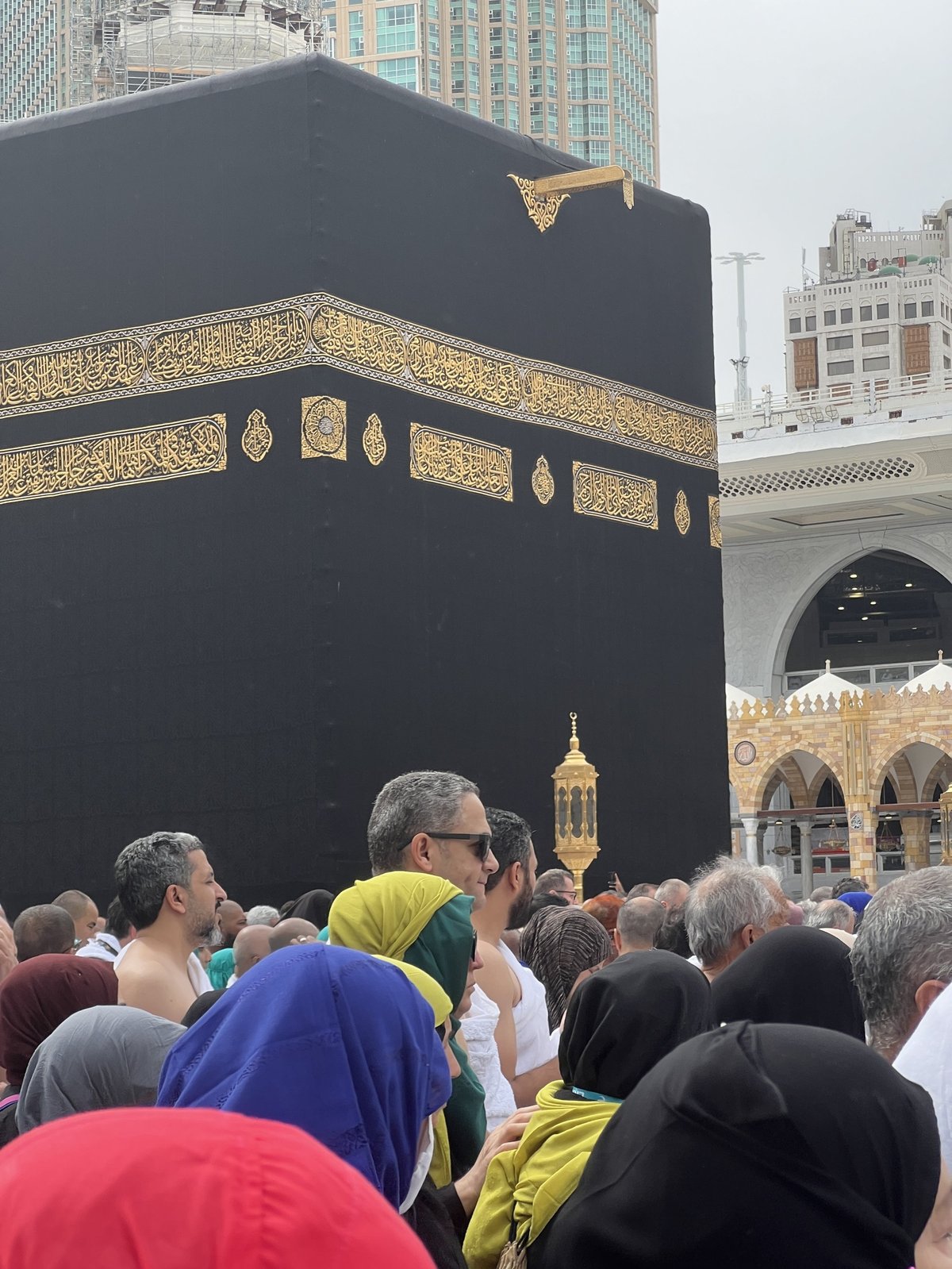
Umrah (العمرة) is a sacred pilgrimage to Makkah that can be performed at any time of the year. Unlike Hajj, it is not obligatory — but it is a deeply beloved act of worship. The word "Umrah" comes from the Arabic root meaning "to visit," reflecting the pilgrim's journey to visit the House of Allah.
The Prophet ﷺ performed Umrah four times in his life. He said: "An Umrah to another Umrah is an expiation for whatever sins are between them." (Bukhari, Muslim). It is a gift from Allah — a chance to wipe the slate clean and return home like a newborn.
Performed Anytime
Unlike Hajj, Umrah can be performed in any month of the Islamic year.
Immense Reward
The Prophet ﷺ said: "Umrah in Ramadan is equal to Hajj." (Bukhari)
No Limit
You may perform Umrah as many times as you are able — there is no limit.
"Perform Hajj and Umrah consecutively — they remove poverty and sins as the bellows removes impurity from iron."
— Prophet Muhammad ﷺ (Tirmidhi, an-Nasa'i)
The Four Pillars of Umrah
Umrah consists of four essential acts that must be performed in sequence. Each pillar carries deep spiritual significance.
Ihram
Entering the sacred state of purity — wearing specific garments, making intention (niyyah), and reciting the Talbiyah. Ihram is both a physical and spiritual preparation.
Learn moreTawaf
Circling the Ka'bah seven times counterclockwise, beginning and ending at the Black Stone. Each circuit represents the unity of believers worshipping One God.
Learn moreSa'i
Walking seven times between the hills of Safa and Marwah — following the footsteps of Hajar (AS), whose trust in Allah brought forth the blessed well of Zamzam.
Learn moreTahallul
The completion of Umrah — shaving or trimming the hair to exit the state of Ihram. A moment of gratitude and renewal.
Learn moreSpiritual Preparation Matters Most
Before you learn the rituals, prepare your heart. Make sincere tawbah (repentance). Resolve any disputes. Return anything you owe. Enter this journey with a clean heart — that is the foundation of an accepted Umrah, insha'Allah.
Prerequisites for Umrah
Ensure you meet these essential requirements before entering Ihram.
Islamic Faith
You must be Muslim. Umrah is a purely Islamic act of worship requiring belief in Allah and the pillars of faith.
Physical & Mental Capacity
You must be physically able to perform the rituals and of sound mind to make proper intention.
Financial Capability
You must have enough wealth to cover travel, accommodation, and expenses without harming your dependents.
Safe Passage
The roads to Makkah must be safe for travel — free from danger, oppression, or obstruction.
Nusuk Registration
A valid permit through the Saudi Nusuk platform is required for all pilgrims entering Makkah.
For Women — Mahram
Women should travel with a mahram according to the majority of scholars. Check specific rulings for your situation.
Ihram — Entering the Sacred State
Ihram is both a physical and spiritual state of devotion. It begins with the intention (niyyah) and wearing prescribed garments — two unsewn white cloths for men, loose modest clothing for women. From this moment until Tahallul, you are a guest of Allah in a state of consecration. Certain worldly actions become forbidden, and your focus turns entirely toward your Creator.
How to Enter Ihram
Perform ghusl (full ritual bath) — as the Prophet ﷺ did before entering Ihram
Apply perfume to your body (sunnah for men, before ihram garments)
Men: Wear two unstitched white cloths — one wrapped around the waist (izar), one draped over the shoulders (rida')
Women: Wear loose, modest clothing — no niqab or gloves during Ihram
Pray two rak'ahs of nafl salah (optional but recommended)
Make intention (niyyah) for Umrah: say 'Labbayka Allahumma Umratan'
Begin reciting the Talbiyah: 'Labbayka Allahumma labbayk...'
Continue Talbiyah until you reach the Ka'bah for Tawaf
The Talbiyah
لَبَّيْكَ اللَّهُمَّ لَبَّيْكَ، لَبَّيْكَ لَا شَرِيكَ لَكَ لَبَّيْكَ، إِنَّ الْحَمْدَ وَالنِّعْمَةَ لَكَ وَالْمُلْكَ، لَا شَرِيكَ لَكَ
Labbayka Allahumma labbayk, labbayka la shareeka laka labbayk, innal-hamda wan-ni'mata laka wal-mulk, la shareeka lak.
"Here I am, O Allah, here I am. You have no partner. Here I am. Indeed, all praise, grace, and sovereignty belong to You. You have no partner."
Prohibited While in Ihram
Mistakes made unknowingly are forgiven. If you forget and do something prohibited, stop immediately, seek forgiveness, and continue. Allah is Most Merciful.
Tawaf — Circling the Ka'bah
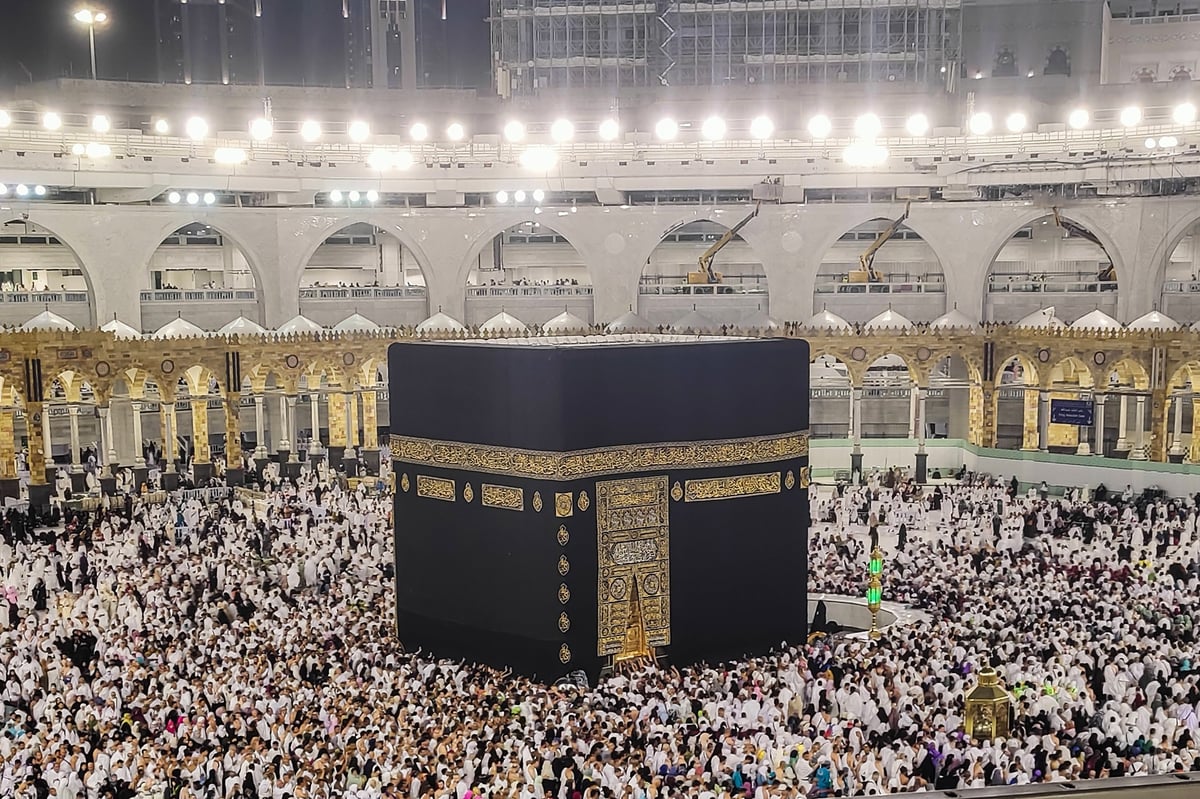
Tawaf is the act of circling the Ka'bah seven times, counterclockwise. It begins at the Black Stone (Hajar al-Aswad) and ends at the same point. Each circuit represents the unity of believers — rich and poor, of every nation, circling the House of the One God together.
How to Perform Tawaf
Face the Ka'bah
Stand facing the Ka'bah with the Black Stone on your right side.
Raise Your Hands & Begin
Raise hands, say "Bismillahi Allahu Akbar," and if possible, touch or kiss the Black Stone. If crowded, simply gesture toward it.
Walk Counterclockwise
Circle the Ka'bah seven times, keeping it on your left. Make du'a, recite Quran, or do dhikr freely.
Ramal (First 3 Circuits)
Men: walk briskly with short steps in the first 3 circuits. This is sunnah, commemorating the Prophet's arrival.
Idtiba' (Men)
Men: uncover your right shoulder during Tawaf by passing the rida' under the right arm.
Complete 7 Circuits
Each full circuit counts as one. Complete all seven with humility and presence of heart.
Pray 2 Rak'ahs at Maqam Ibrahim
After Tawaf, pray two rak'ahs behind Maqam Ibrahim — or anywhere nearby if crowded. Recite Surah Al-Kafirun and Surah Al-Ikhlas.
Drink Zamzam
Drink Zamzam water while standing, facing the Ka'bah. Make du'a beforehand — Zamzam is for whatever it is drunk for.
Recommended Du'a During Tawaf
رَبَّنَا آتِنَا فِي الدُّنْيَا حَسَنَةً وَفِي الْآخِرَةِ حَسَنَةً وَقِنَا عَذَابَ النَّارِ
Rabbana atina fid-dunya hasanatan wa fil-akhirati hasanatan wa qina 'adhaban-nar.
"Our Lord, give us in this world what is good and in the Hereafter what is good, and protect us from the punishment of the Fire."
This is the most recommended du'a between the Yemeni Corner and the Black Stone, but you may make any du'a in any language throughout Tawaf.
Sa'i — Walking Between Safa and Marwah
Sa'i commemorates Hajar (AS), the wife of Prophet Ibrahim (AS), who ran seven times between the hills of Safa and Marwah in desperate search of water for her infant son Ismail. Her complete trust in Allah — even in a barren desert, alone with a crying child — brought forth the miracle of Zamzam.
The Story of Hajar (AS)
Ibrahim (AS) left Hajar and baby Ismail in the barren valley of Makkah with only a bag of dates and a water-skin. When Hajar asked, "Has Allah commanded you to do this?" and Ibrahim said yes, she replied: "Then He will not abandon us." When the water ran out, she ran between Safa and Marwah seven times, searching desperately. Allah sent Jibril (AS) who struck the ground, and Zamzam gushed forth. Her trust became the ritual we perform to this day.
How to Perform Sa'i
Begin at Safa facing the Ka'bah. Recite: 'Innas-safaa wal-marwata min sha'a'irillah'
Say 'Allahu Akbar' three times, make personal du'a
Walk toward Marwah at a normal pace
Men: Run briskly in the green-lit section (between the green markers)
Upon reaching Marwah, face the Ka'bah and repeat the du'a
Return to Safa — this completes 2 trips. Continue until 7 trips are complete
End at Marwah (trip 7 finishes there)
Tahallul — Completing Your Umrah
Tahallul means "to become lawful" — it is the final act that releases you from the state of Ihram. With this, your Umrah is complete, Alhamdulillah.
Shaving (Halq)
Completely shaving the head. This is more virtuous for men and preferred by many scholars.
"Allah and His Angels send blessings upon those who shave their heads..." — Tirmidhi
Trimming (Taqseer)
Cutting hair to at least a fingertip's length. This is what women do, and it is equally valid for men.
A fingertip's length from all over the head is the minimum — for both men and women.
Your Umrah is Complete!
You have fulfilled the rites, and your Umrah is finished by the mercy of Allah. You are now free from the restrictions of Ihram. May Allah accept your Umrah, forgive your sins, and invite you back again and again.
Taqabbal Allahu minna wa minkum — May Allah accept from us and from you. Ameen.
Ready to Perform Umrah?Let PilgrimIQ Guide You
Get step-by-step guidance, ritual validation, and location-aware duas in the palm of your hand. Your sacred journey deserves clarity, confidence, and spiritual companionship.
May Allah grant you an accepted Umrah and a journey filled with peace, ease, and closeness to Him. Ameen.